
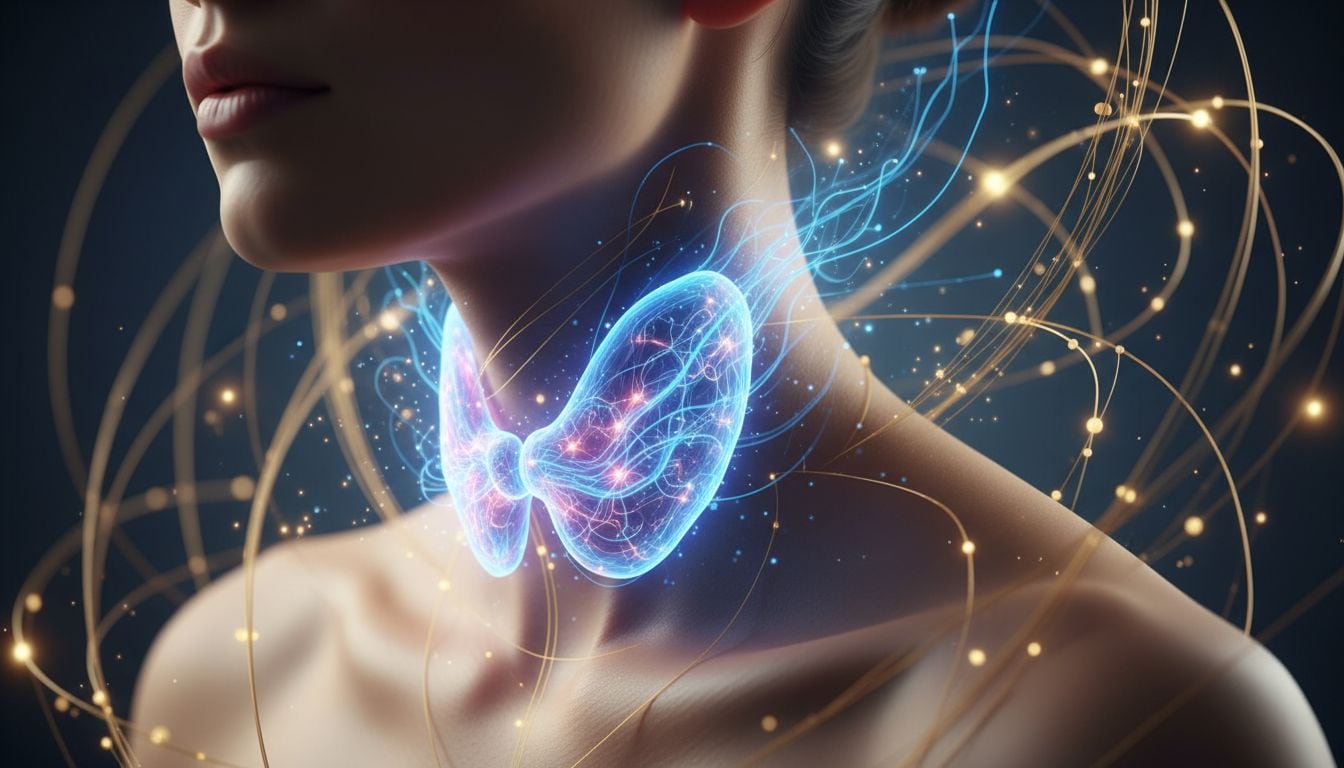
When you think about the organs that keep you alive, your heart and lungs likely come to mind first. But nestled at the base of your neck is a small, butterfly-shaped gland that quietly orchestrates nearly every function in your body: the thyroid. In the latest episode of The Workings of Our Bodies, hosts Josh Bowman and Clara Wynn pull back the curtain on this unsung hero, revealing how it acts as a \"metabolic maestro\" dictating your energy, mood, and even your creative potential.
Whether you have struggled with unexplained fatigue or are simply curious about human physiology, understanding the thyroid is key to understanding how we function on a cellular level.
The Engine Room: T3, T4, and the HPT Axis
At the core of thyroid function is the production of two primary hormones: thyroxine (T4) and triiodothyronine (T3). While the gland produces T4 in greater quantities, T3 is the powerhouse—the biologically active form that really gets things moving. T4 must be converted into T3 through a process called deiodination to exert its full effect on your cells.[3]
This production isn't random. It is meticulously controlled by the hypothalamic-pituitary-thyroid (HPT) axis. Think of this as a sophisticated thermostat. When your body detects low levels of thyroid hormones, the brain signals the thyroid to ramp up production to maintain homeostasis.[5]
Metabolism: The Accelerator and the Brake
The most famous role of the thyroid is regulating metabolism. Josh and Clara explain that if your body is a high-performance car, thyroid hormones are the accelerator. They dictate your Basal Metabolic Rate (BMR)—the energy you burn just to stay alive (breathing, circulating blood, and repairing cells).[7]
When hormone levels are too high (hyperthyroidism), the engine overheats, leading to rapid weight loss and anxiety. When they are too low (hypothyroidism), the engine stalls, causing weight gain and sluggishness. Research confirms a direct correlation: higher TSH levels (indicating a sluggish thyroid) are associated with weight gain, while higher free T4 levels align with weight loss.[6]
The table below outlines how these opposing states impact the body:
| Feature | Hypothyroidism (Underactive) | Hyperthyroidism (Overactive) |
|---|---|---|
| Metabolic State | Hypometabolic (Slowed down) | Hypermetabolic (Sped up) |
| Weight Trend | Weight gain | Weight loss |
| Energy Levels | Fatigue, sluggishness | Restless energy, insomnia |
| Mood | Depression, brain fog | Anxiety, irritability |
| Temperature | Cold intolerance | Heat intolerance |
Mitochondria and Thermogenesis
The thyroid’s reach extends deep into the cell, specifically to the mitochondria—the power plants of our bodies. Thyroid hormones are critical modulators of mitochondrial function, influencing how we create ATP (energy).[4] This is why low thyroid function often feels like someone pulled the plug on your energy levels; your cells literally lack the currency to perform tasks efficiently.
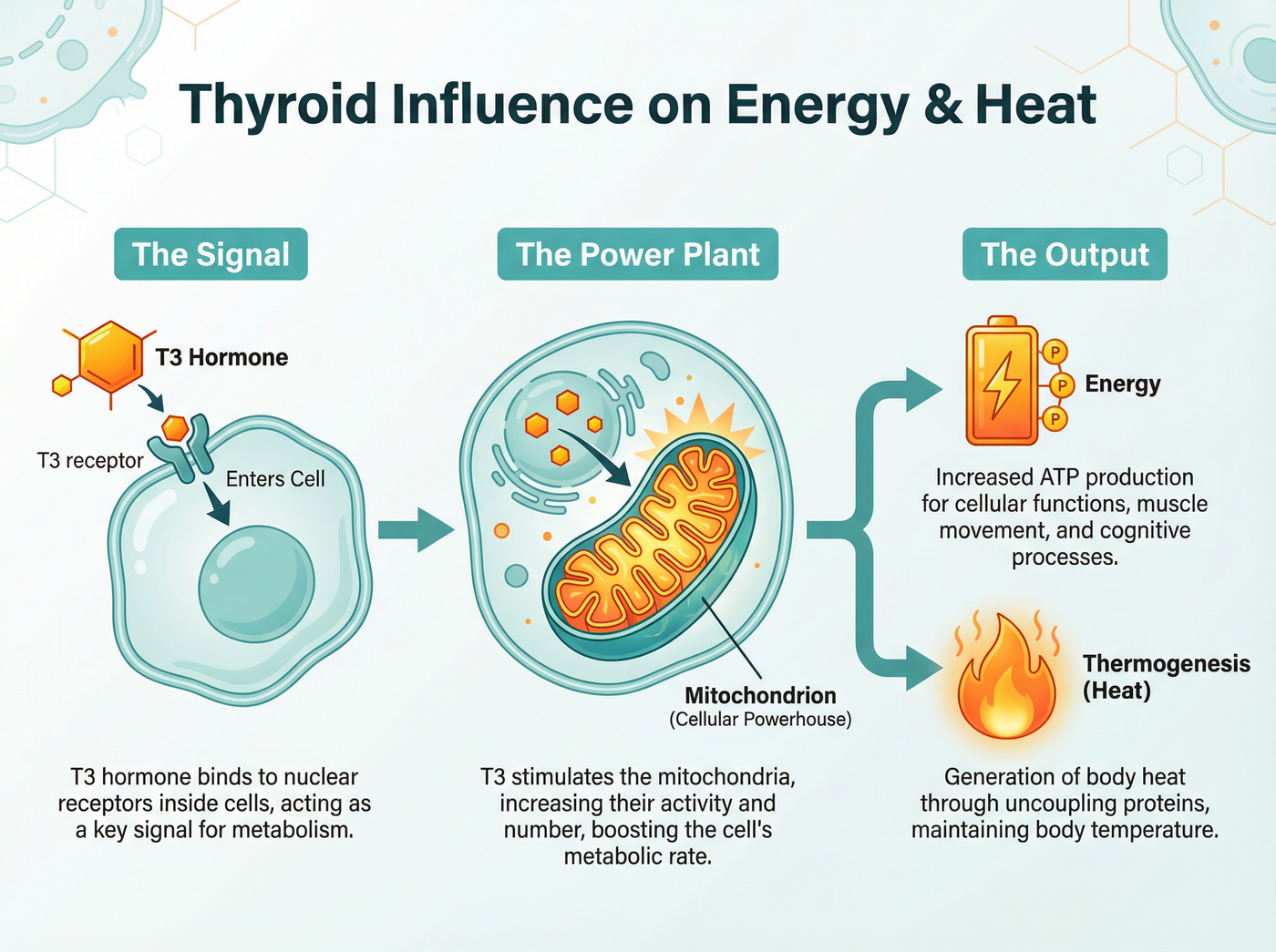
Furthermore, these hormones are vital for keeping us warm. Through a process called adaptive thermogenesis, T3 stimulates Brown Adipose Tissue (BAT)—a special type of fat that burns energy to create heat rather than storing it.[1] This is particularly important during cold exposure, where the thyroid helps activate \"browning,\" a process where white fat cells begin to behave more like calorie-burning brown fat.[8]
Mood, Creativity, and the Mind
Perhaps one of the most overlooked aspects of thyroid health is its connection to our mental state. The hosts discuss how the delicate balance of T3 and T4 is essential for cognitive clarity. \"Brain fog\" is a common complaint among those with thyroid dysfunction.[2]
While direct studies on \"thyroid and creativity\" are emerging, the physiological links are clear. Creativity requires sustained focus, emotional resilience, and abstract thinking—all of which are compromised when the thyroid is underactive. Depression, impaired memory, and slowed speech are hallmarks of hypothyroidism that can stifle creative output. Conversely, a balanced thyroid supports the cognitive agility required for high performance.

Looking Ahead: Targeted Therapies
The future of treating thyroid-related metabolic issues is bright. As discussed in the episode, the field is moving toward tissue-selective treatments. For example, in 2024, the FDA granted accelerated approval to Resmetirom (Rezdiffra), a liver-selective thyroid hormone receptor agonist.[5] Unlike traditional treatments that flood the whole body with hormones—potentially straining the heart—these newer drugs specifically target the liver to improve metabolic health without systemic side effects.
Whether it is regulating your internal furnace or clearing the fog from your mind, the thyroid is truly a metabolic maestro. Keeping it healthy is not just about avoiding disease; it is about optimizing your capacity to think, create, and thrive.
Listen to the episode
Dive deeper into the science of your body's most influential gland by listening to the full episode below:
The Thyroid: Your Body's Metabolic Maestro
Sources
- Thyroid Hormones and Metabolism Regulation: Which Role on Brown Adipose Tissue and Browning Process?
- What Does your Thyroid Do? 10 Critical Functions to Know
- Thyroid Gland Anatomy and Physiology
- The key roles of thyroid hormone in mitochondrial regulation, at interface of human health and disease
- Metabolic Messengers: Thyroid Hormones
- Physiology, Thyroid Hormone
- The Thyroid Gland Regulating Growth and Metabolism
- Central vs. Peripheral Action of Thyroid Hormone in Adaptive Thermogenesis: A Burning Topic