
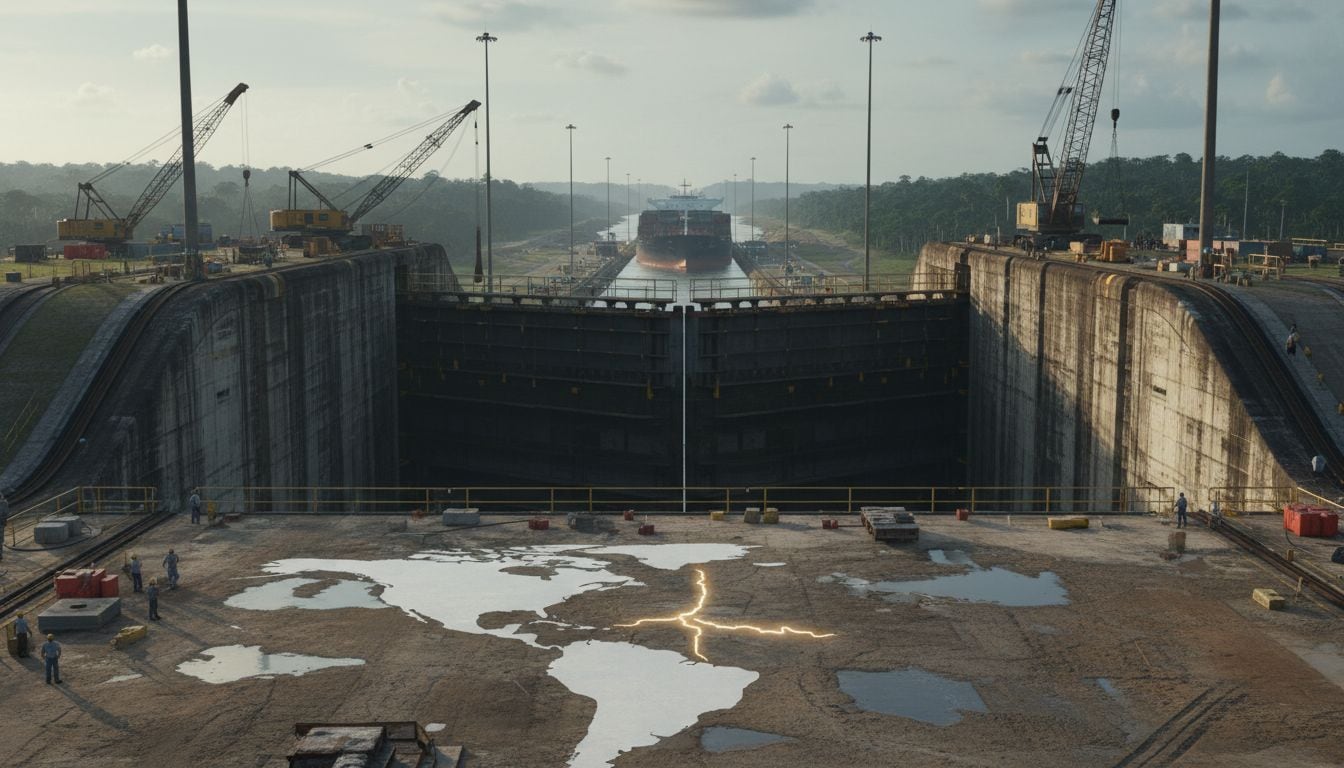
Imagine a world where moving a ship from New York to San Francisco required an 8,000-mile detour around the treacherous tip of South America. For centuries, this was the harsh reality of global commerce, cementing the Isthmus of Panama as a "map-maker's obsession." The dream was simple: cut the land to connect the oceans. The execution, however, would become one of the deadliest and most complex engineering challenges in human history history.
Today, the Panama Canal stands not just as a conduit for trade, but as a monument to the shift from brute force to strategic ingenuity. From the disastrous French attempt to the revolutionary American "water bridge" concept, the canal's story is a masterclass in overcoming geology and disease.
Listen to the episode
Dive deeper into the engineering challenges and historical drama behind this mega-project in our latest episode:
The Panama Canal: Cutting Through the Continental Divide
The French Failure: A Lesson in Hubris
The first serious attempt to sever the isthmus began in the 1880s, led by Ferdinand de Lesseps, the celebrated diplomat behind the Suez Canal. Fresh from his success in Egypt, de Lesseps suffered from what historians call "geographic hubris." He believed he could apply the exact same method used in the flat, sandy desert of Suez to the rugged, tropical jungles of Panama: a sea-level canal.
This decision proved fatal. Panama's geology was unstable, its rains torrential, and its rivers prone to massive flooding. The French team dug tirelessly, but the mud slid back into the trenches almost as fast as it was removed. Far worse was the invisible enemy. Workers were decimated by yellow fever and malaria, diseases misunderstood at the time to be caused by "miasma" or bad air. By the time the French company collapsed in 1889, over 20,000 workers had died, and the project was abandoned in disgrace.[4]
The American Pivot: A Bridge of Water
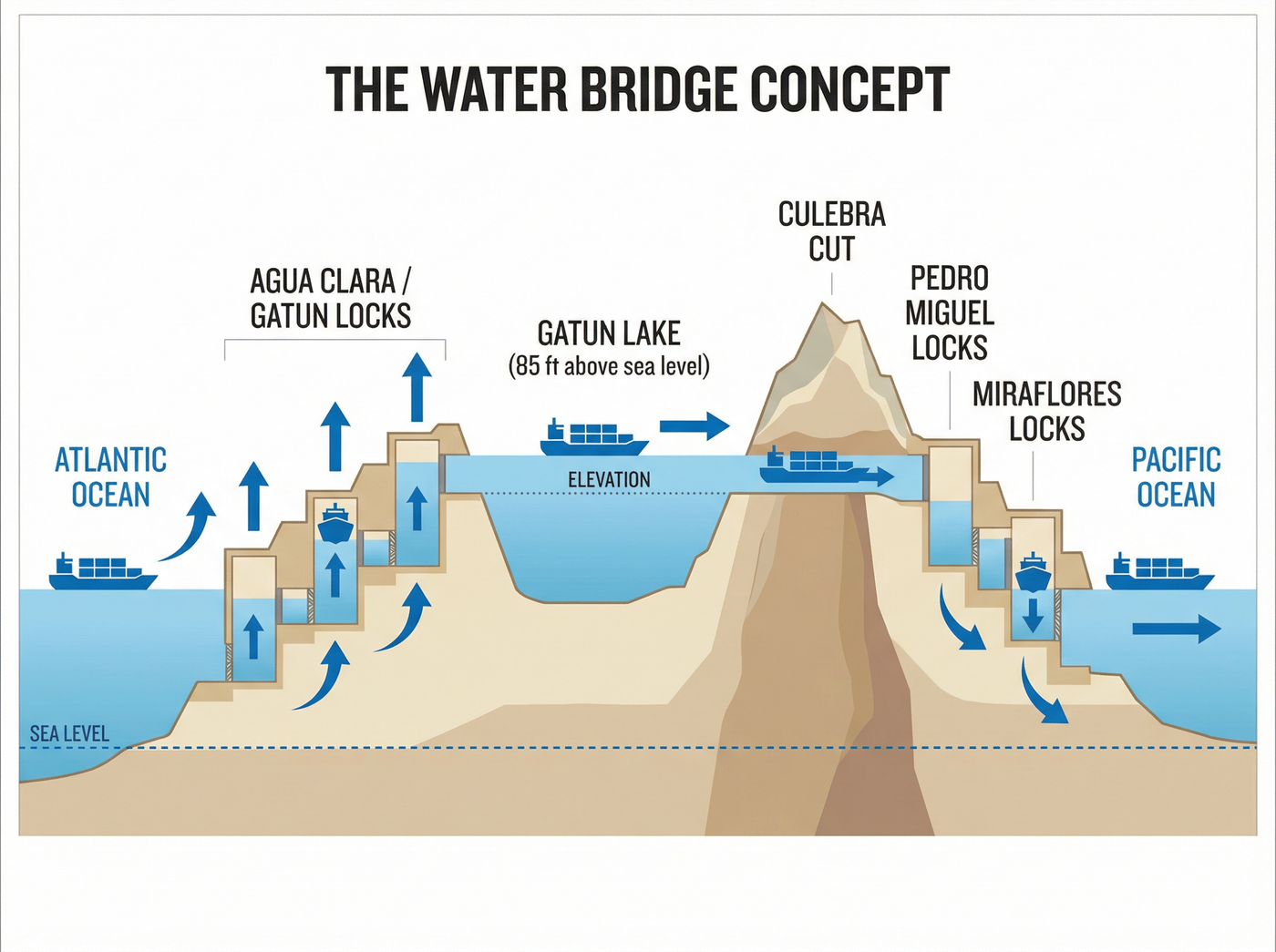
When the United States took over the project in 1904 under President Theodore Roosevelt, engineers faced a choice: repeat the French mistake or rewrite the playbook. They realized that digging down to sea level was a losing battle against the unstable mountains of the Continental Divide. Instead, they decided to lift the ocean up.
The solution was a lock-and-lake system. By damming the volatile Chagres River with the massive Gatun Dam, engineers created Gatun Lake. At the time of its completion, this was the largest artificial lake in the world.[2] The lake effectively acted as a high-altitude "water bridge" 85 feet above sea level, allowing ships to transit over the mountains rather than through them.
Engineering the Impossible
The lock system developed for the canal remains a marvel of civil engineering. The locks function as massive water elevators. Each chamber is 1,000 feet long and 110 feet wide.[5] When a ship enters, gravity alone—no pumps—feeds water from the lake above into the chamber through culverts the size of railroad tunnels. It takes approximately 26 million gallons of fresh water to perform a single lockage.[3]
To ensure these colossal vessels don't damage the concrete walls, they are not steered by their own engines inside the locks. Instead, they are tethered to electric locomotives known as "mules" that run on tracks alongside the lock walls, keeping the ship perfectly centered.
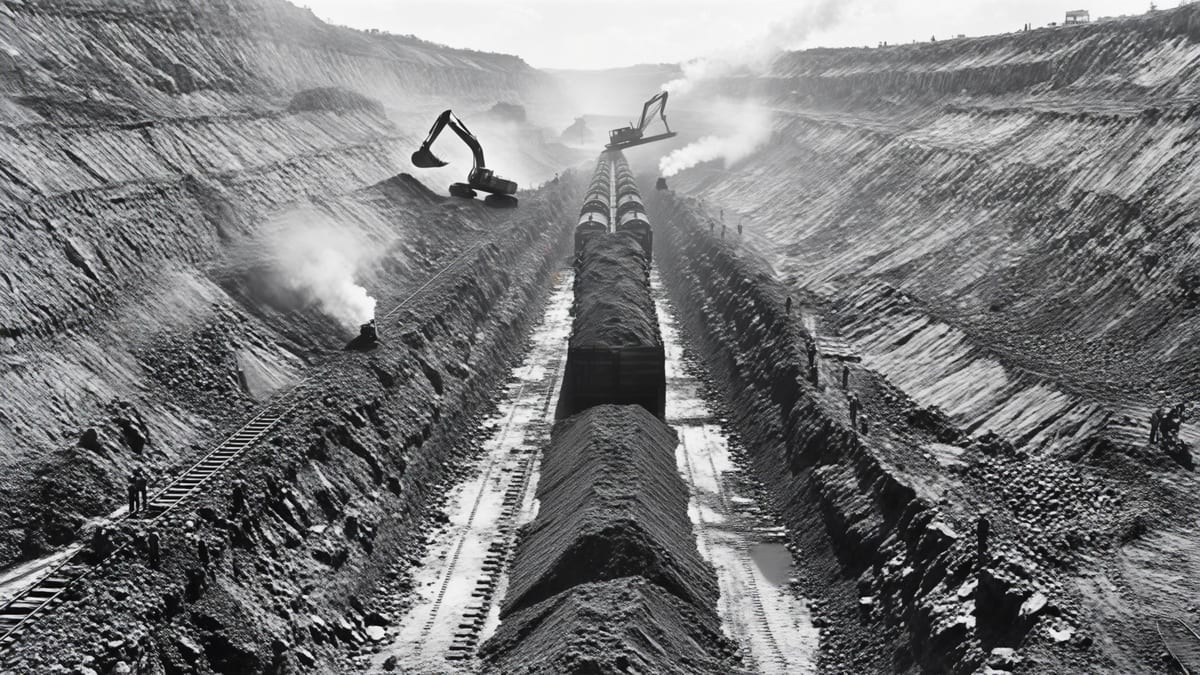
The most arduous physical task was carving the Culebra Cut (now the Gaillard Cut) through the Continental Divide. This nine-mile excavation required removing over 100 million cubic yards of earth. It was a chaotic symphony of steam shovels and dynamite, constantly plagued by landslides that would undo months of work in minutes.[1]
Conquering the Invisible Enemy
The American success was not strictly due to better steam shovels or lock designs; it was arguably won by sanitation. Colonel William Gorgas, the chief sanitary officer, implemented a rigorous public health campaign based on the then-controversial theory that mosquitoes carried yellow fever and malaria.
Gorgas launched a military-style assault on the mosquito. His teams fumigated homes, drained swamps, and installed screens on windows across the Canal Zone. The results were dramatic: yellow fever was eradicated on the isthmus, and malaria cases dropped significantly. This allowed the workforce—which peaked at over 40,000—to survive and finish the job.[2]
A Modern Legacy
The canal opened in 1914, forever altering global trade routes. However, the engineering challenges didn't end there. To accommodate modern "Neopanamax" vessels—ships too large for the original locks—a massive expansion was completed recently. These new locks utilize water-saving basins to recycle 60% of the water used per transit, a crucial adaptation for a system dependent on rainfall in an era of climate uncertainty.[5]
As of Tuesday, January 20, 2026, the canal remains a vital artery of commerce, though it faces renewed debates regarding international treaties and water management. Yet, it stands as a testament to the idea that the most durable engineering solutions are those that work with nature—harnessing gravity and rain—rather than fighting against it.
Sources
- How Was the Panama Canal Built? | History, Engineering, & Public Health
- Learn about the history of the Panama Canal - Autoridad del Canal de Panamá
- Panama Canal | Definition, History, Ownership, Treaty, Map, Locks, & Facts
- History of the Panama Canal
- Design Of The Locks - Autoridad del Canal de Panamá