
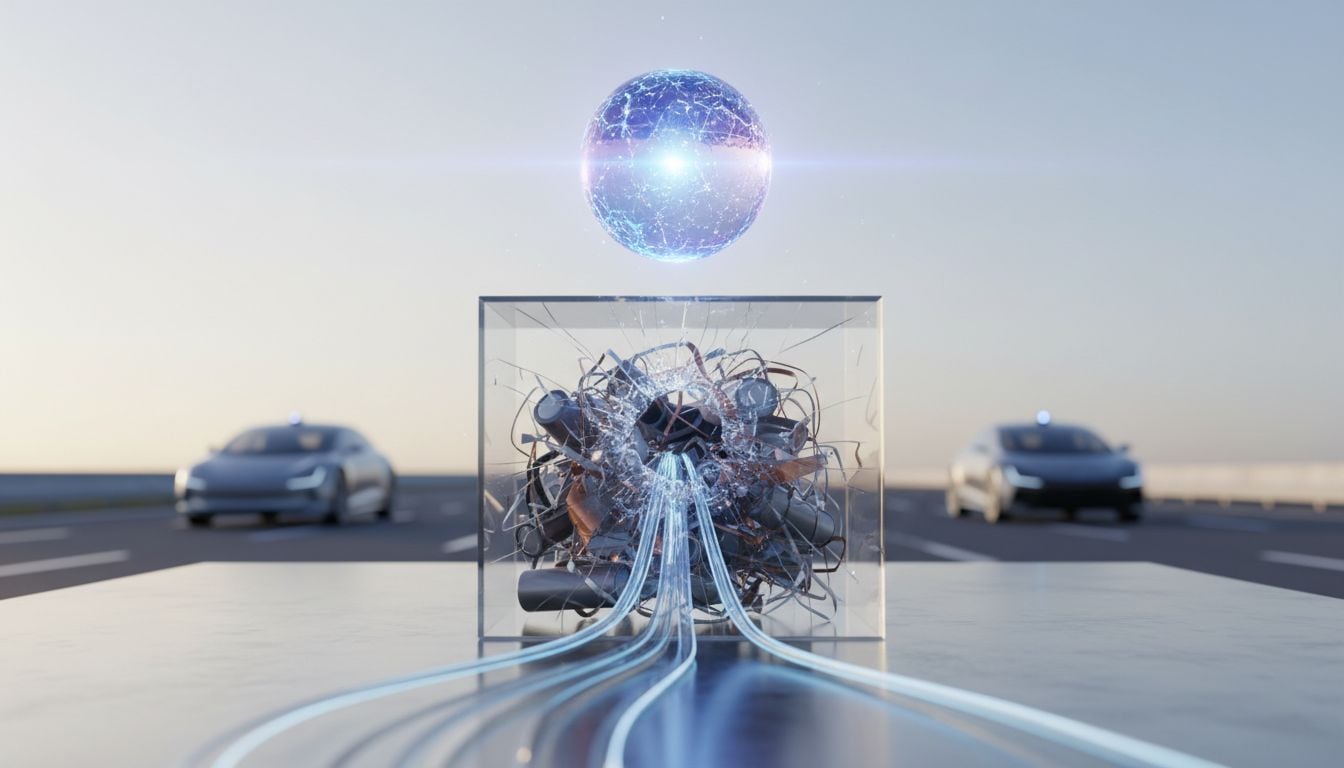
For over three decades, lithium-ion batteries have been the silent workhorses of the modern world. From the smartphone in your pocket to the electric vehicle (EV) in your driveway, this technology has powered the digital age. However, as of January 24, 2026, experts are increasingly warning that traditional lithium-ion chemistry has hit a "glass ceiling." The limitations are physical, chemical, and economic.
The next great leap in decarbonization isn't coming from a software update, but from a fundamental reimagining of the chemistry inside the battery box: the solid-state battery (SSB). This technology promises to solve the safety risks of liquid electrolytes while delivering performance metrics that were previously considered impossible.
The Liquid Problem vs. The Solid Solution
Traditional lithium-ion batteries rely on a liquid electrolyte to move ions between the anode and cathode. While effective, this liquid is inherently volatile. Following years of incremental improvements, the industry is now confronting a hard truth: liquid electrolytes pose flammability risks that require heavy, complex, and expensive thermal management systems.[2]
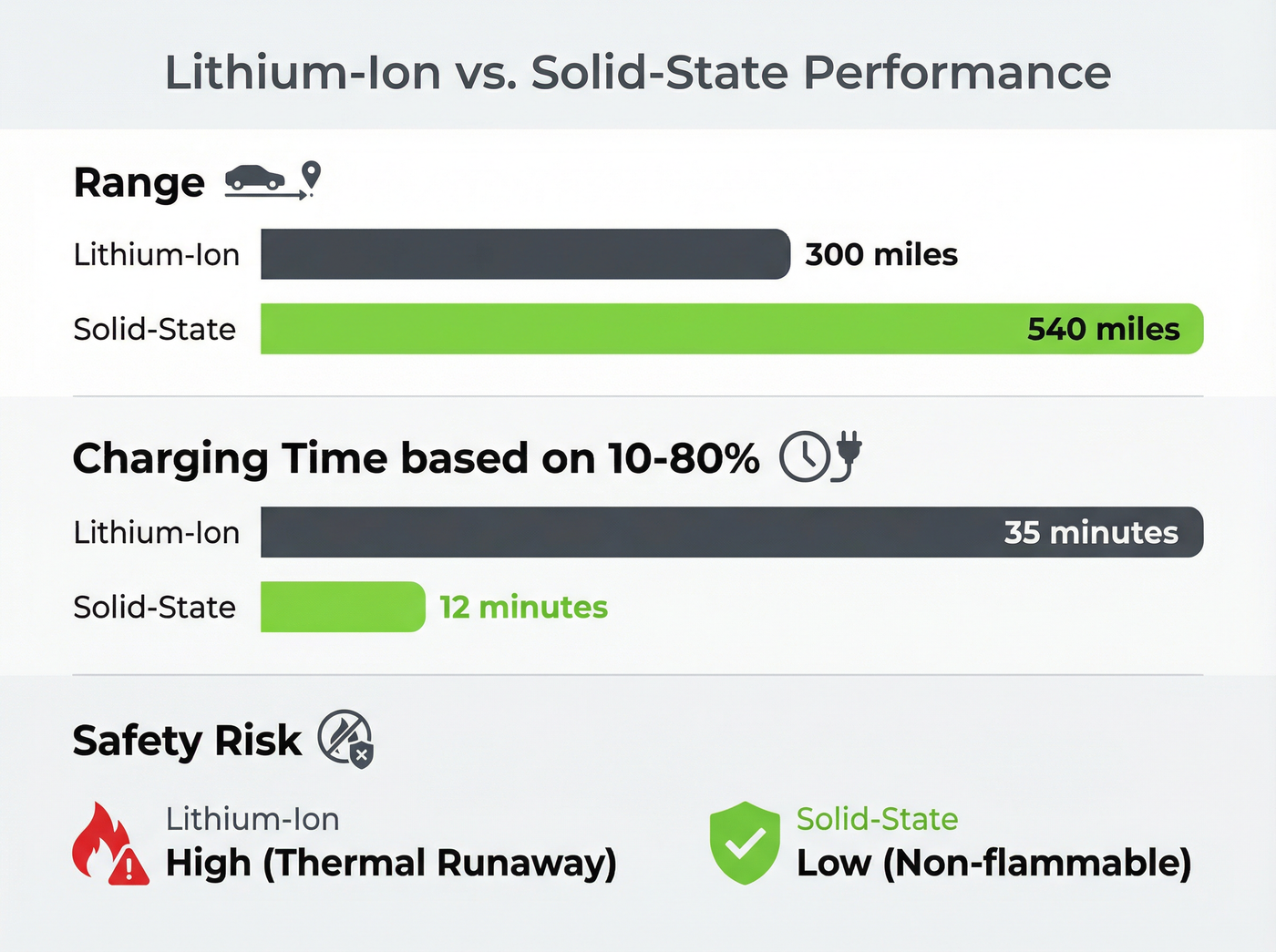
Solid-state batteries solve this by replacing the liquid with a stable solid material, such as ceramic, glass, or sulfide. This simple phase change eliminates the risk of leakage and drastically reduces the chance of thermal runaway events.
The Lithium Metal Advantage
The benefits of SSBs extend far beyond safety. By stabilizing the internal chemistry, engineers can replace the traditional graphite anode with a lithium metal anode. This is a critical architectural shift. Lithium metal has a far higher specific capacity than graphite, allowing the battery to store much more energy in the same volume.
Current research indicates that this switch could increase the energy density of EV batteries significantly, translating to an estimated 80% increase in driving range for consumers.[1][5] Imagine an electric vehicle that currently travels 300 miles on a charge suddenly capable of reaching 540 miles without increasing the physical size of the battery pack.
Shattering Charging Speed Limits
Beyond range, the most consumer-facing benefit is charging speed. Range anxiety is often compounded by "charging time anxiety." Because solid electrolytes can handle higher currents with less heat generation, SSBs have the potential to charge from 10% to 80% in under 15 minutes.[4] This brings the EV ownership experience much closer to the convenience of refueling a gasoline vehicle.
The "Green Premium" and Manufacturing Hurdles
If the technology is so superior, why aren't all cars running on solid-state batteries in 2026? The answer lies in the immense difficulty of manufacturing. Producing these cells requires ultra-precise layering techniques and highly specialized industrial environments.
Manufacturing solid-state cells often necessitates extreme "dry room" conditions to prevent the materials from reacting with moisture in the air.[3] This adds a substantial "green premium" to the cost of production. While pilot lines from companies like QuantumScape and Toyota are operational, scaling these delicate processes from the lab to the gigafactory level is a fierce economic challenge.[5]

The Road Ahead
The transition to solid-state technology is not just about making cars go further; it is about stabilizing the grid. The high energy density and safety of SSBs make them ideal candidates for stationary energy storage, allowing renewable energy to be stored more efficiently in smaller footprints.[6]
As we move through 2026, the race is on to bridge the gap between theoretical performance and manufacturing reality. The potential to revolutionize transportation is clear, but the industry must first solve the puzzle of mass production.
Listen to the episode
Dive deeper into the chemistry and economics of this battery revolution by listening to our latest episode:
Solid-State Batteries: The Next EV Revolution
Sources
- A comprehensive review of solid-state batteries
- Solid-State Lithium Batteries: Advances, Challenges, and Future Perspectives
- Solid-state batteries: Hype, hopes, and hurdles (PDF)
- Solid-State Batteries: Chemistry, Battery, and Thermal Management System — A Critical Review
- Solid-state batteries could revolutionize EVs and more—if they can surmount technical and financial hurdles
- Solid State Batteries Volume 1: Emerging Materials and Applications