
In modern society, sleep is often treated as a luxury—something to be traded for extra hours of productivity or entertainment. However, emerging research suggests that treating sleep as mere “downtime” is a critical error. Sleep is a dynamic, active state essential for physical restoration, cognitive maintenance, and emotional resilience.
On a recent episode of The Workings of Our Bodies, hosts Josh Bowman and Nash Daniel explored the intricate science of sleep, revealing how our nightly cycles shape everything from our immune systems to our social interactions.
Listen to the episode
Dive deeper into the science of rest with Josh and Nash in this insightful episode:
The Power of Sleep: Restorative Cycles for Peak Performance
The Architecture of Sleep: Two Systems, One Goal
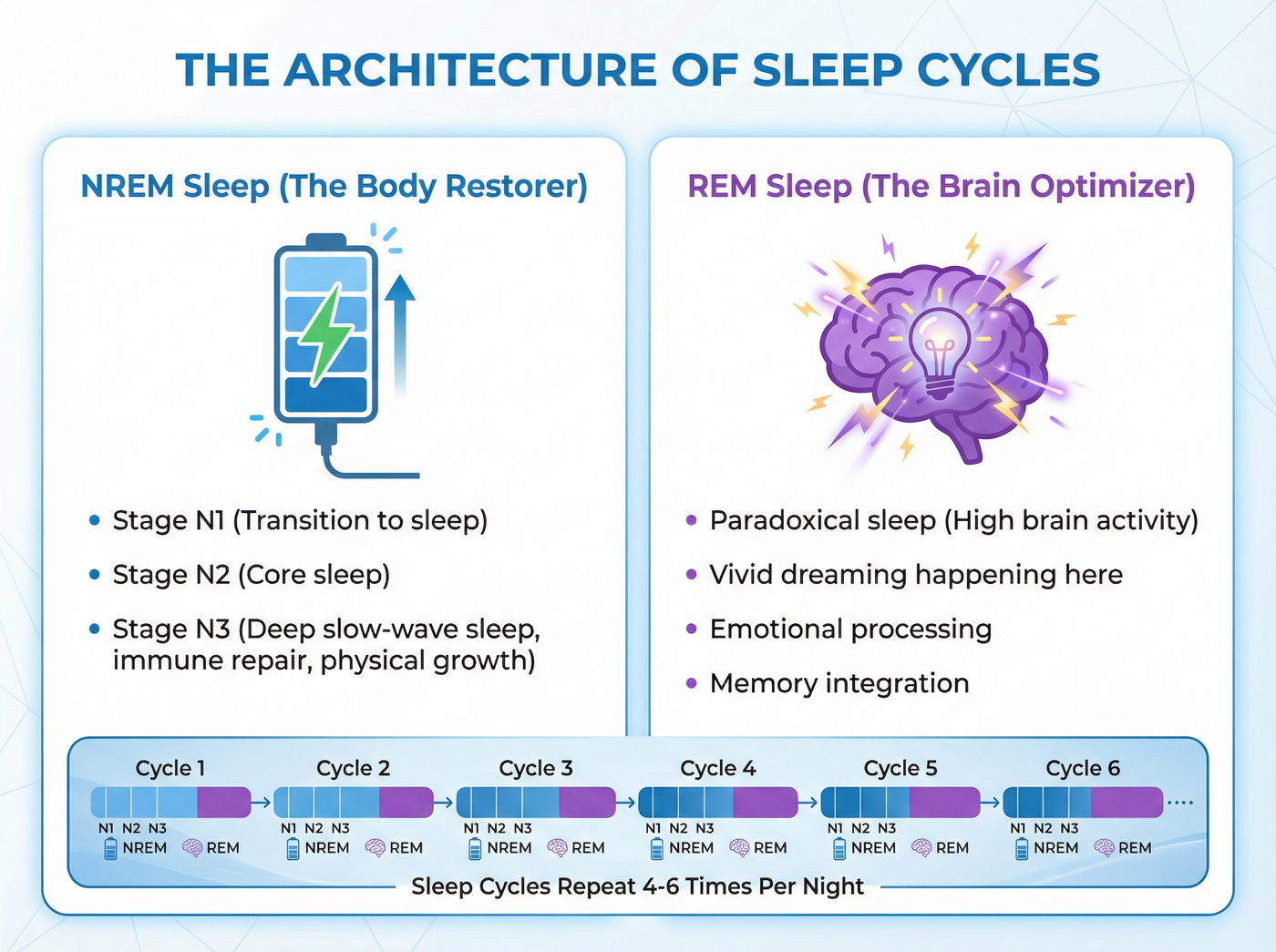
Sleep is not a uniform state of unconsciousness. It is orchestrated in repeating cycles broadly categorized into Non-Rapid Eye Movement (NREM) and Rapid Eye Movement (REM) sleep. These stages vary significantly in brain activity and purpose.
NREM sleep is further divided into three stages: N1 (lightest), N2, and N3. The N3 stage is particularly critical; often called slow-wave sleep (SWS), it is characterized by deep physical relaxation and slow brain waves. This is the physiological “repair shop” of the body, crucial for immune system function and physical restoration[3].
In contrast, REM sleep is a paradoxical state. While the body experiences temporary muscle paralysis, brain activity resembles wakefulness. This stage is associated with vivid dreaming and appears to be vital for emotional regulation and creativity[3].
Cognitive Decline and the “Cleaning” Theory
One of the most compelling areas of modern sleep science is the relationship between sleep and brain health, specifically regarding neurodegenerative diseases like Alzheimer’s. Public awareness of this link is high; a recent survey found that 85% of people believe sleep habits have a strong influence on brain health[1].
Research supports this to a degree, suggesting that prioritizing sleep could potentially delay the onset of cognitive decline by up to a decade. Some estimates propose that addressing sleep problems could prevent up to 15% of Alzheimer’s disease cases[1]. The prevailing theory, known as the glymphatic system hypothesis, posits that deep NREM sleep helps clear metabolic waste products, such as amyloid-beta proteins, from the brain.
However, the science is complex. While older adults typically experience less deep sleep, some recent studies indicate that disturbances in REM sleep—rather than deep sleep—might be more strongly linked to cognitive decline in certain populations[1]. Despite ongoing debates about the exact mechanisms, the consensus remains that sleep is a pillar of long-term neurological health.
Cognitive Function and Memory
Beyond long-term disease prevention, sleep has an immediate impact on how we think and perform today. As of Monday, January 19, 2026, researchers continue to validate that sleep is vital for “cognitive reserve”—the brain's ability to cope with damage or stress by using neural networks more efficiently[5].
Different sleep stages appear to handle different types of memory:
| Sleep Stage | Primary Cognitive Function | Impact of Deprivation |
|---|---|---|
| NREM (N3/Deep) | Hippocampal replay; transferring new facts to long-term storage[2]. | Reduced ability to retain new information. |
| REM | Consolidating procedural memories (skills) and processing emotions[2]. | Difficulty managing complex emotions; reduced creativity. |
Lack of sleep specifically targets the prefrontal cortex, the area of the brain responsible for executive functions like planning and impulse control. Even a single night of poor sleep can result in slower reaction times and impaired judgment[4]. Conversely, consistent restoration improves working memory and response inhibition[4].
The Emotional and Social Cost of Fatigue
Sleep deprivation does not just make us tired; it changes who we are socially and emotionally. When we are sleep-deprived, the connection between the amygdala (the brain’s emotional center) and the prefrontal cortex is weakened. Without the “brakes” of the prefrontal cortex, the amygdala becomes hyper-reactive to negative stimuli, leading to mood swings and increased anxiety[6].

This internal chemical imbalance manifests externally as the “asocial phenotype.” Sleep loss is linked to social withdrawal and loneliness. Interestingly, studies have shown that well-rested observers rate sleep-deprived individuals as appearing less healthy and less attractive, and are less inclined to interact with them[8].
On a societal level, this phenomenon may reduce empathy and civic participation. As sleep quality declines across populations, the collective capacity for helping behaviors and social connection may diminish, suggesting that sleep debt has consequences that extend far beyond the individual[8].
The Future of Sleep Enhancement
Given the difficulty many face in getting the recommended 7–9 hours of rest, science is looking for technological solutions. Innovative non-invasive therapies are currently being explored, including:
- Acoustic stimulation: Playing specific sounds to enhance deep slow-wave sleep.
- Kinesthetic stimulation: Gentle rocking motions to promote sleep onset.
- Thermal manipulation: Regulating body temperature to maintain sleep continuity.
Preliminary results suggest these methods may help improve memory consolidation and sleep quality, particularly in older adults[8]. Until these technologies become commonplace, the best advice remains consistent: treat sleep as a biological necessity, not a lifestyle choice.
Sources
- Sleep Patterns and Human Brain Health
- The role of sleep in enhancing cognitive functions: What the research shows
- Sleep Cycles and Health: Role of Sleep Stages and Lifestyle Factors
- The effects of insufficient sleep and adequate sleep on cognitive function in healthy adults
- The Complex Relationship between Sleep and Cognitive Reserve
- Sleep and Its Impact on Brain Function: A Neuroscientific Perspective
- The new science of sleep: From cells to large-scale societies