
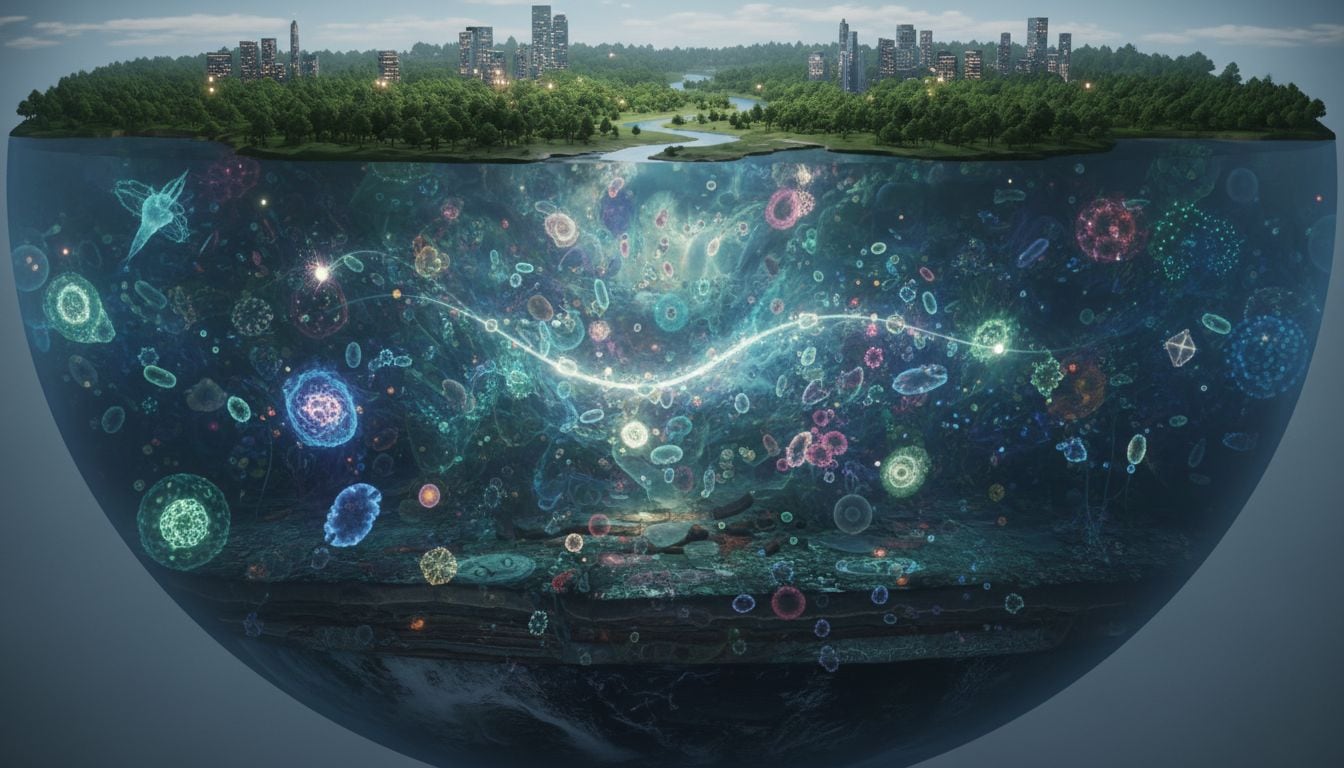
The world we perceive is merely a surface layer, a thin crust of biological activity riding atop a deep, ancient, and invisible ocean of life. While human history is measured in centuries, the microbial world has acted as the architect of our planet for nearly four billion years. To truly understand Earth, we must look past the forests and cities and peer into the microscopic realm of bacteria, archaea, fungi, protists, and viruses.
In a recent podcast episode featuring our guest Rhea, we pull back the curtain on this bustling microscopic metropolis. These organisms are not merely passengers on our planet. They are the primary engineers of our atmosphere, the keepers of our soil, and the drivers of global chemistry. Humans are simply recent houseguests on an Earth constructed and maintained by the true architects of the biosphere.
The Vast Scale of Microbial Life
The sheer density of microbial life remains one of the most staggering realities of biological study. In just one gram of healthy garden soil, there are approximately ten billion microorganisms.[4] This astonishing figure illustrates that macroscopic creatures like ourselves are truly the minority. Collectively, microbes represent roughly 15% of the total biomass of the planet, but they hold nearly all of its chemical potential. Without their tireless metabolism, the vital cycles of nitrogen, carbon, and phosphorus would stall, and life as we know it would swiftly cease.
Traditionally, biology has categorized these life forms by their cellular structure. Bacteria and archaea are the simple single-celled organisms without a defined nucleus. Fungi and protists possess complex internal machinery akin to our own cells. Finally, there are the viruses, which occupy a fascinating liminal space between the living and the non-living.
Microbial Control of Atmospheric Chemistry
While frequently cast as problematic germs, microbes are effectively the premier chemists of the planet. Billions of years ago, cyanobacteria pioneered oxygenic photosynthesis, transforming a toxic, methane-heavy atmosphere into the oxygen-rich environment we rely on today. This oxygen production is not just a historical event. Today, at least 50% of global oxygen is produced by microscopic phytoplankton and prochlorococcus living in the oceans.
The carbon cycle is equally bound to microbial activity. Although trees are famous as carbon sinks, microbes serve as the ultimate arbiters of where carbon goes. They decompose organic matter, releasing carbon dioxide back into the atmosphere, but they also lock massive amounts of carbon away. In the ocean, the biological pump moves carbon to the seafloor as microbes sink and die, helping regulate the climate of the Earth.
The Underground Metropolis and the Nitrogen Cycle
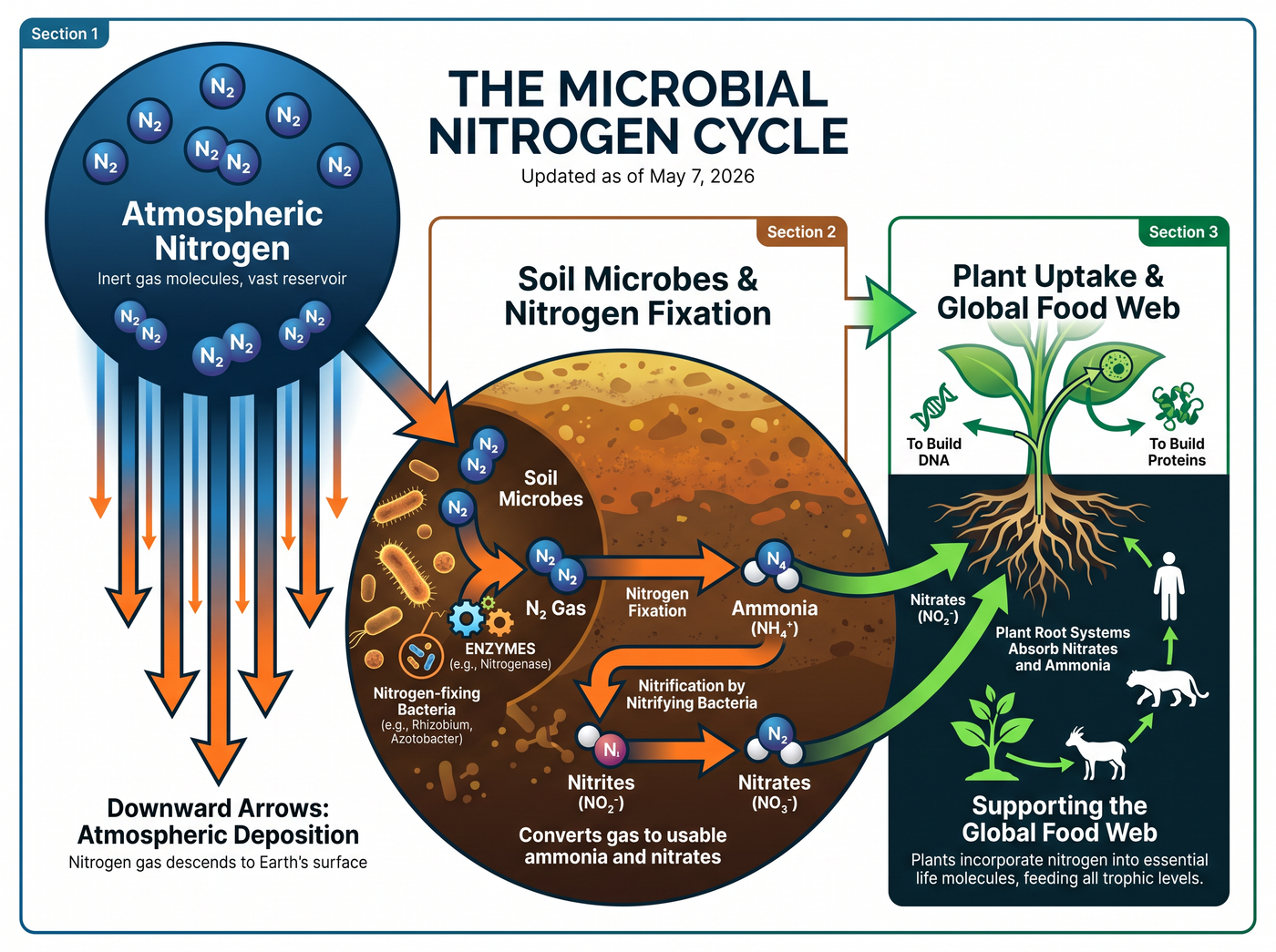
Microbes provide the essential chemical processing required for all life to build proteins and DNA. The conversion of gaseous nitrogen into a biologically usable form represents a critical bottleneck that only specific bacteria and archaea can resolve. Through nitrogen fixation, these microscopic soil and water specialists unlock this otherwise inert gas.[5] Without them, plants would have no way to acquire the nitrogen necessary for growth, triggering the total collapse of the food web.
If the oceans are the lungs of the planet, the soil is its digestive system. At the center of this earthy domain are the fungi. Underground, massive networks of thread-like hyphae bridge the gaps between plants and trees in a symbiotic trade network often dubbed the Wood Wide Web. Mycorrhizal fungi wrap around plant roots to forage for water and minerals in exchange for sugars.
Furthermore, maintaining this soil biodiversity acts directly as a shield for human health. A major 2026 study published in Cell Host and Microbe highlighted that a diverse soil microbiome functions as a natural immune system for the planet. In healthy, biodiverse soils, human pathogens like Salmonella or Listeria struggle to compete with established native microbes.[1] When soil is degraded through heavy chemical use or over-tillage, this biological barrier collapses.
Microbial Dark Matter: Archaea and Protists
We cannot discuss this hidden metropolis without noting archaea and protists. For decades, archaea were mistakenly clumped together with bacteria. We now recognize them as a distinct domain of life, as different from bacteria as humans are from trees. Archaea reign supreme in extreme chemistry. As the only organisms capable of producing methane, these methanogens thrive in oxygen-poor wetlands and the digestive tracts of livestock.
Protists represent the incredible diversity of single-celled eukaryotes, ranging from the predatory amoeba to giant oceanic kelps. As the grazers of the microscopic world, protists consume bacteria and fungi to keep populations in check, ensuring nutrients cycle upward to larger animals.
Viruses: The Ultimate Regulators
Viruses require a specific category of their own. They are the most abundant biological entities on the planet. If aligned end-to-end, the virus population of Earth would stretch for 100 million light-years. Lacking metabolism and the ability to reproduce independently, viruses act as genetic couriers. In marine environments, viruses cause a viral shunt by killing about 20% of the bacterial biomass every single day. This prevents any single species from dominating the ecosystem while continuously releasing crucial nutrients back into the water.
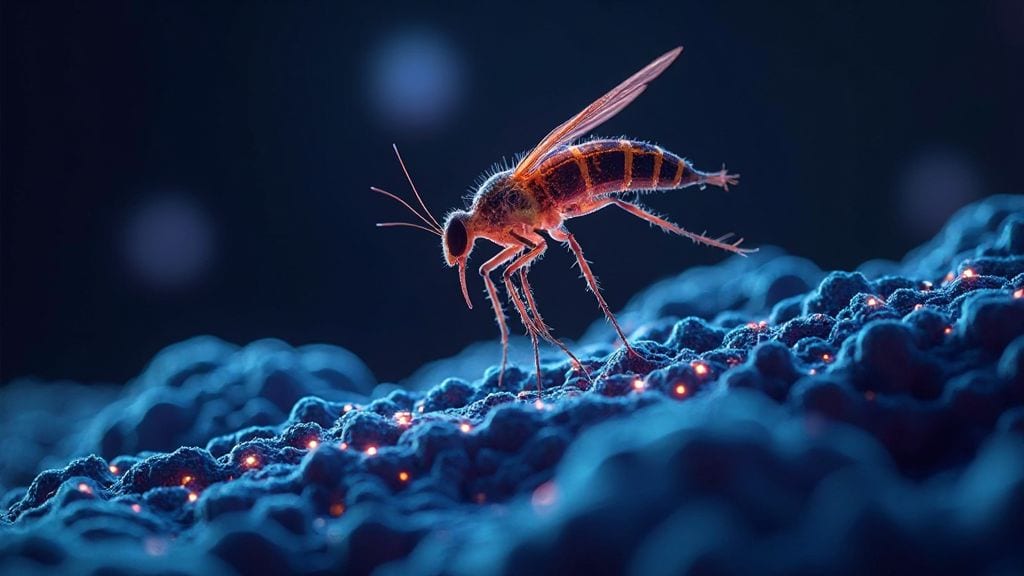
Viruses are essentially the most prolific genetic engineers in existence. Through horizontal gene transfer, they move genetic material between vastly different species. Their role in shaping evolution and global biogeochemical pathways continues to astound researchers. For instance, the recent release of a global atlas of soil viruses reveals massive, previously unexplored biodiversity that directly impacts global nutrient cycles.[2]
The Internal Frontier: Microbes and Digestion
Microbes do not just govern the external world (they also thrive inside us). The human microbiome is a personalized ecosystem comprising trillions of microbes. Rather than being single, autonomous organisms, humans are considered holobionts (a collection of host and microbial cells operating in unison).
In the digestive tract, microbes ferment complex fibers into short-chain fatty acids, nourishing our gut lining and regulating metabolism. They synthesize essential vitamins, such as B12 and Vitamin K, and provide colonization resistance by outcompeting invading pathogens. Emerging research on the gut-brain axis even links microbial byproducts to mood, behavior, and cognitive function.
Looking Forward: Geoengineering and Disease Solutions
While humans often interact with the microbial world through the lens of disease, pathogenicity is rare. Out of millions of species, less than 1% cause human illness. When traditional tools like antibiotics falter against evolving superbugs, researchers increasingly look to the microbial world for solutions, such as using targeted phage therapy.
At a planetary level, scientists are beginning to realize that the climate crisis cannot be resolved without consulting microbes. Microbial geoengineering explores using specific bacteria to scrub greenhouse gases from the atmosphere or stimulate oceanic carbon absorption.[3] It is clear that the future health of our planet runs directly through the microscopic world.
Listen to the Episode
Want to venture deeper into the unseen world that powers our planet? Check out the full podcast episode where Rhea dives into the global food web, ancient archaea, and the viruses shaping evolution. Listen to Microbes, Viruses, and the Invisible Majority of Life here.
Sources
- Soil biodiversity linked to lower human infectious disease risk
- A global atlas of soil viruses reveals unexplored biodiversity and potential biogeochemical impacts | Nature Microbiology
- Microbes Also Change the Climate. Could That Help Us? | Quanta Magazine
- Soil Is Alive: The Microbes Under Your Feet That Feed the Planet - Curious Minds
- Soil Microbes and Microorganisms: Understanding Soil Biology and Its Impact on Plant Health