
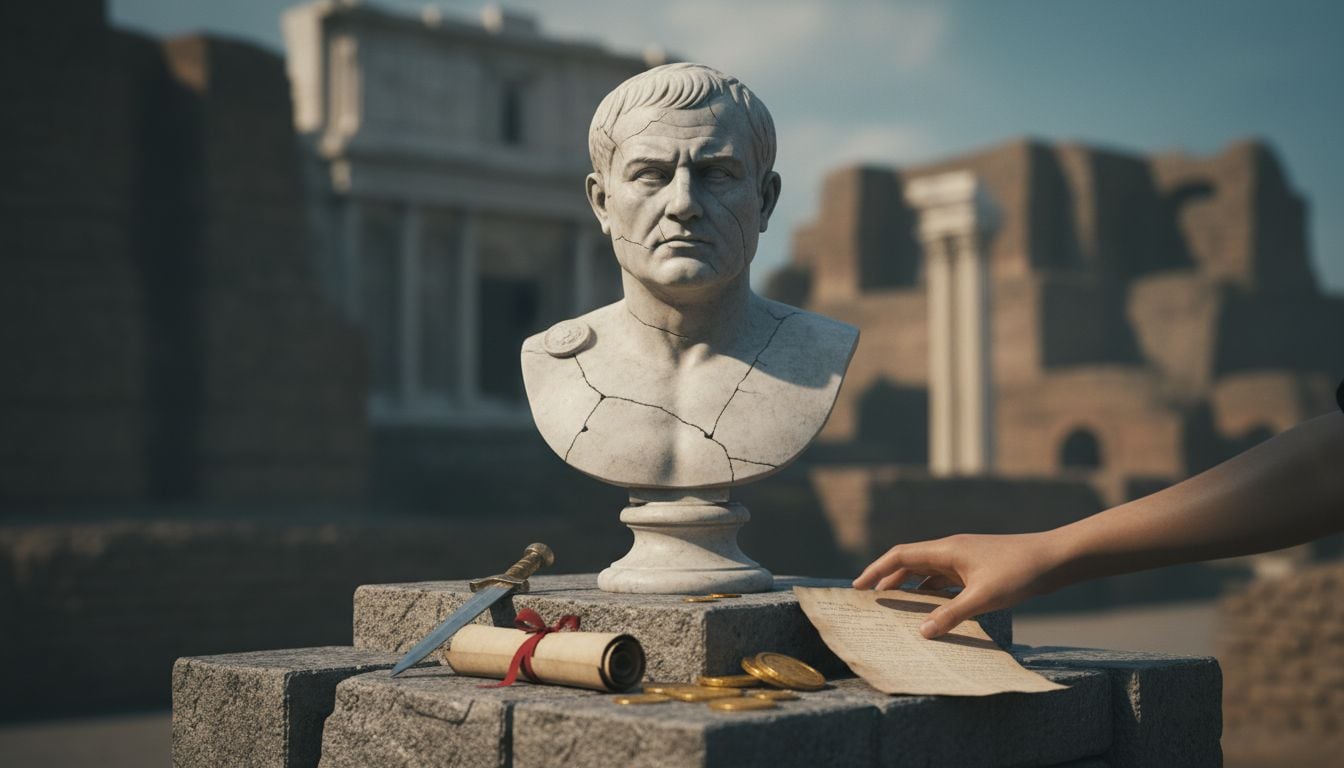
Few names in history echo as loudly as Julius Caesar. Often remembered as the ultimate symbol of Roman power, the reality of his life is far more complex than the marble statues suggest. He was not born into effortless authority; rather, he was the scion of a fading aristocratic family who clawed his way to the top through debt, risk, and political genius. His actions did not just change the map of Europe—they dismantled a Republic and laid the foundation for an Empire that would define the Western world for centuries.
The Rise from Obscurity
Contrary to the myth of inevitable destiny, Gaius Julius Caesar was born in 100 BCE to a patrician family, the Julii, that was rich in lineage but poor in influence and coin. The Roman Republic of his youth was tearing itself apart in a struggle between the Optimates (traditionalists supporting the Senate) and the Populares (populists appealing to the masses). Caesar’s aunt was married to Marius, a leader of the Populares, which placed a target on young Caesar’s back when the rival dictator Sulla seized control.
Sulla stripped Caesar of his inheritance and priesthood, forcing him to flee Rome. This early brush with political violence taught him a vital lesson: in Rome, safety was an illusion, and power was the only shield. He joined the military, where he not only survived but thrived, earning the Civic Crown for saving the life of a fellow citizen in battle.[3]
Buying the Love of the People
Upon returning to Rome, Caesar realized that the path to supreme authority required two things the Senate hoarded: military command and the adoration of the mob. To bridge the gap between his ambition and his bank account, he adopted a dangerous strategy. As he climbed the political ladder—the cursus honorum—he spent lavishly on public games and infrastructure as an aedile.
He did not use his own money; he used borrowed gold. By accumulating staggering personal debt, Caesar bet his life on his future success. He effectively made his creditors invested in his rise—if he failed, they would never be repaid.[5]
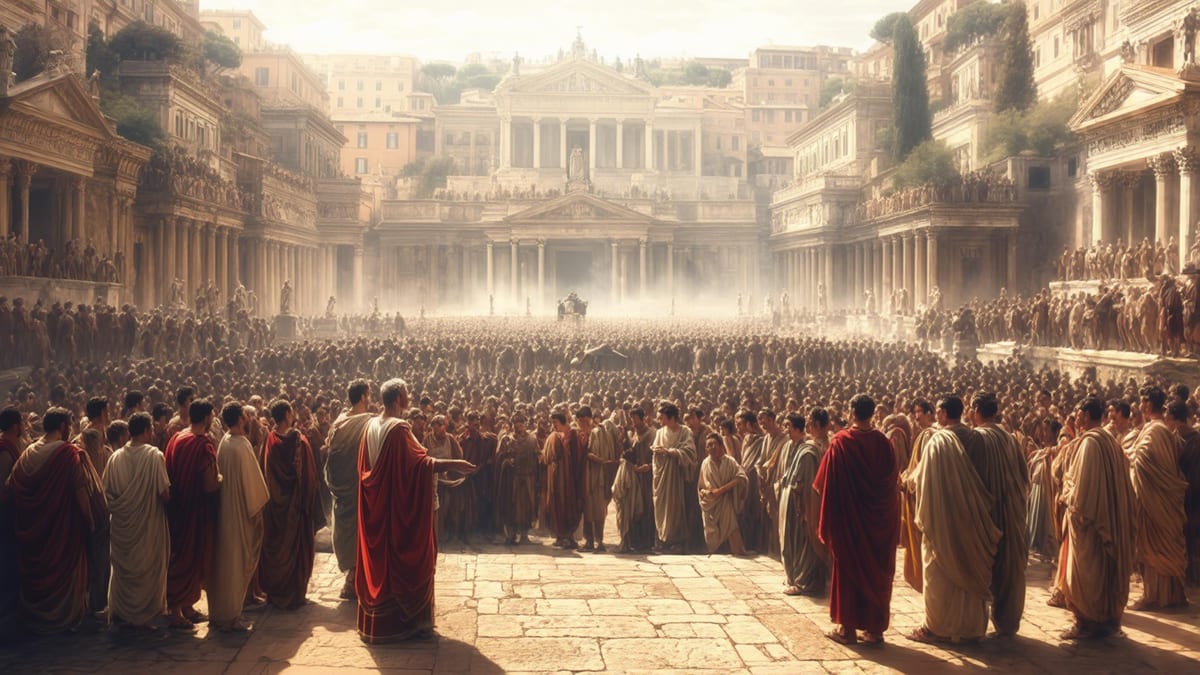
The Three-Headed Monster
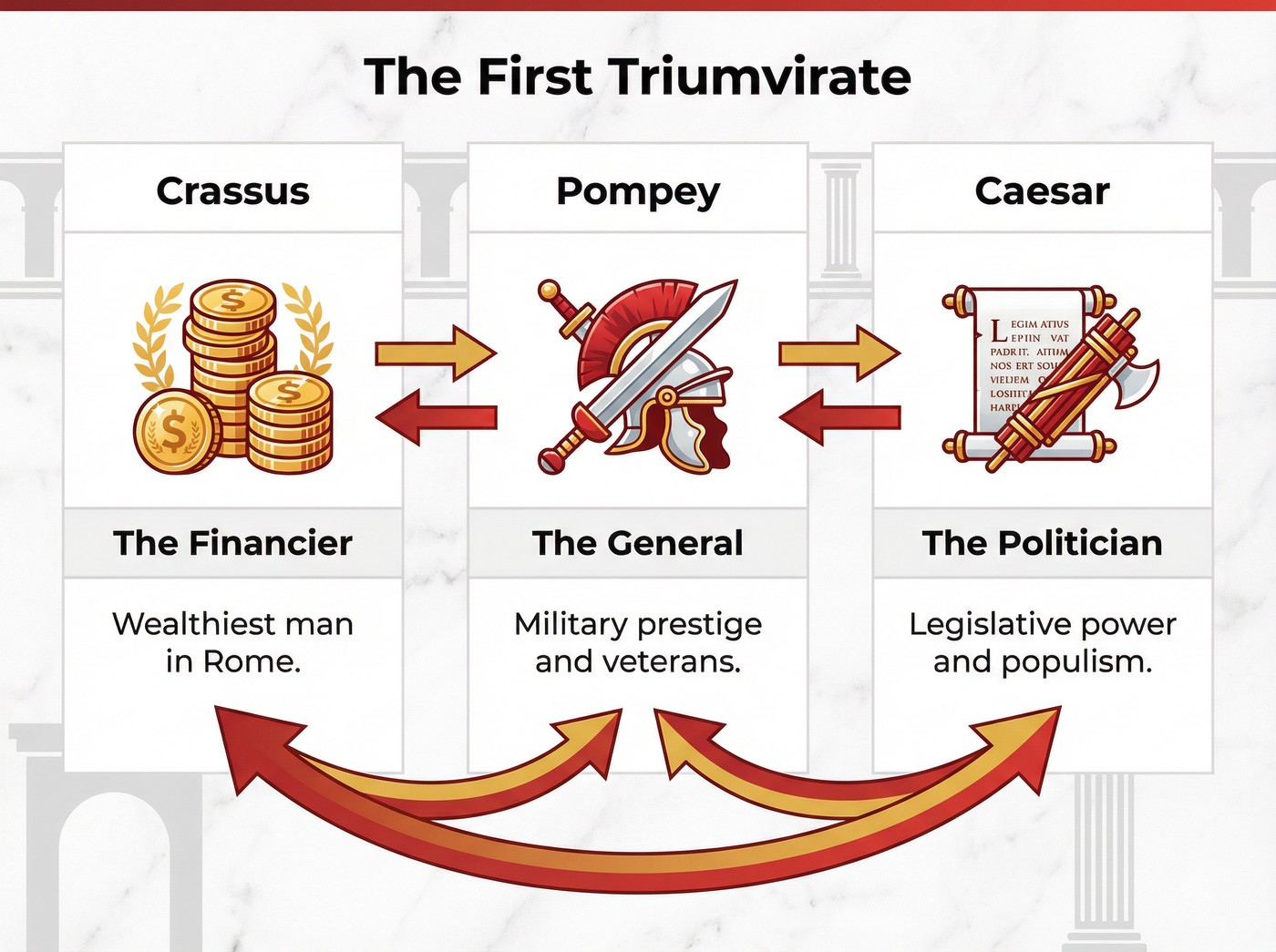
In 60 BCE, Caesar orchestrated a masterstroke of political engineering. He formed an unofficial alliance known as the First Triumvirate with two other titans of Rome: Pompey the Great, the renowned general, and Crassus, the wealthiest man in Rome.[2]
This alliance was a perfect machine: Crassus provided the funding, Pompey provided the military clout and veterans, and Caesar provided the political energy to push their agenda through the Senate. To seal this bond, Caesar gave his daughter, Julia, to Pompey in marriage.
The Rubicon and Civil War
Following his consulship, Caesar spent nearly a decade conquering Gaul (modern-day France), an aggressive campaign that enriched him and forged his legions into a fiercely loyal fighting force. But back in Rome, the Triumvirate crumbled. Crassus died in a failed invasion of Parthia, and Julia died in childbirth, severing the personal link between Caesar and Pompey.[6]
The Senate, fearing Caesar’s growing power, aligned with Pompey and ordered Caesar to disband his army and return to Rome for trial. Caesar knew returning as a private citizen meant exile or death. On a night in January 49 BCE, he made the ultimate gamble. He led one legion across the Rubicon River, the border of his province, effectively declaring war on the Roman state.
Despite being outnumbered, Caesar’s speed and tactical brilliance allowed him to sweep through Italy and eventually defeat Pompey at the Battle of Pharsalus. He chased his rival to Egypt, only to find Pompey had been murdered by local courtiers—a dishonorable end that reportedly brought Caesar to tears.
Reforms and Assassination
Victorious, Caesar returned to Rome not just as a consul, but eventually as Dictator Perpetuo—dictator for life. He initiated sweeping reforms that stabilized the state but terrified the old guard. He revamped the unwieldy Roman calendar (creating the basis for the Julian calendar used for centuries), tackled the debt crisis, and extended citizenship to loyal provincials.[1]
However, his accumulation of power and his regal affectations—wearing purple robes and allowing statues of himself among the gods—convinced conservative Senators that he intended to become a king.

On the Ides of March (March 15), 44 BCE, a group of conspirators led by Brutus and Cassius stabbed Caesar to death at a Senate meeting. Ironically, he fell at the base of a statue of Pompey. The assassins believed they had restored the Republic. Instead, they had plunged Rome into chaos. The resulting power vacuum led to the rise of Caesar's great-nephew, Octavian (Augustus), who would complete what Caesar started and become Rome's first true Emperor.
Listen to the episode
Julius Caesar: The Architect of an Empire