
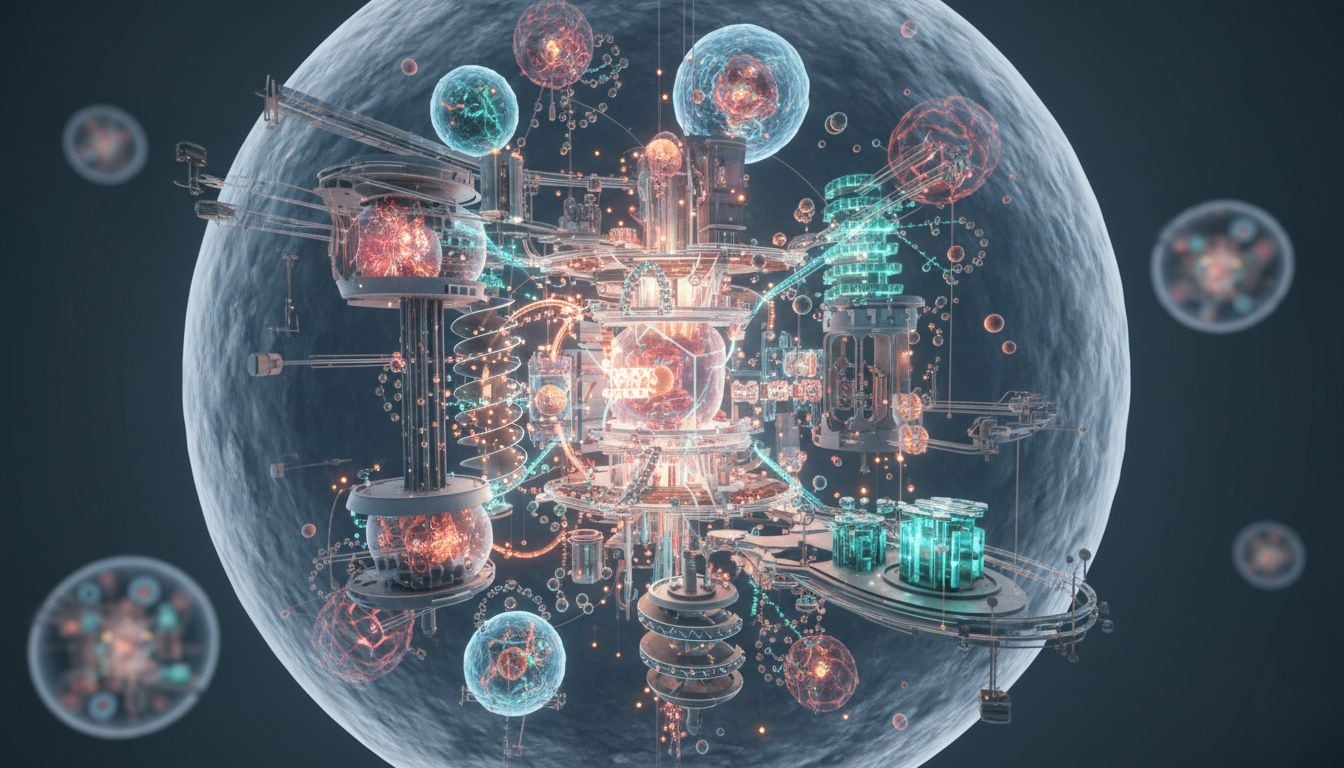
It is easy to imagine a biological cell as a simple microscopic blob of fluid, but this outdated model misses the true complexity of life. Inside every cell is a highly regulated, high-stakes environment where trillions of operations occur every second. The cell functions with the efficiency of a global logistics hub, maintaining a delicate, millisecond-perfect rhythm that defines existence itself. Understanding this intricate system is crucial because it reveals exactly how our bodies prevent themselves from simply dissolving into the surrounding environment.
Nature's Border Patrol: The Cell Membrane
The plasma membrane is the ultimate security system of the cell. It relies heavily on a phospholipid bilayer, which is a structural marvel composed of two layers of fat molecules. The hydrophilic (water-loving) heads face outward to interact with the fluid environment, while the hydrophobic (water-fearing) tails tuck inside, creating an oily barrier that stops the cell from dissolving [6].
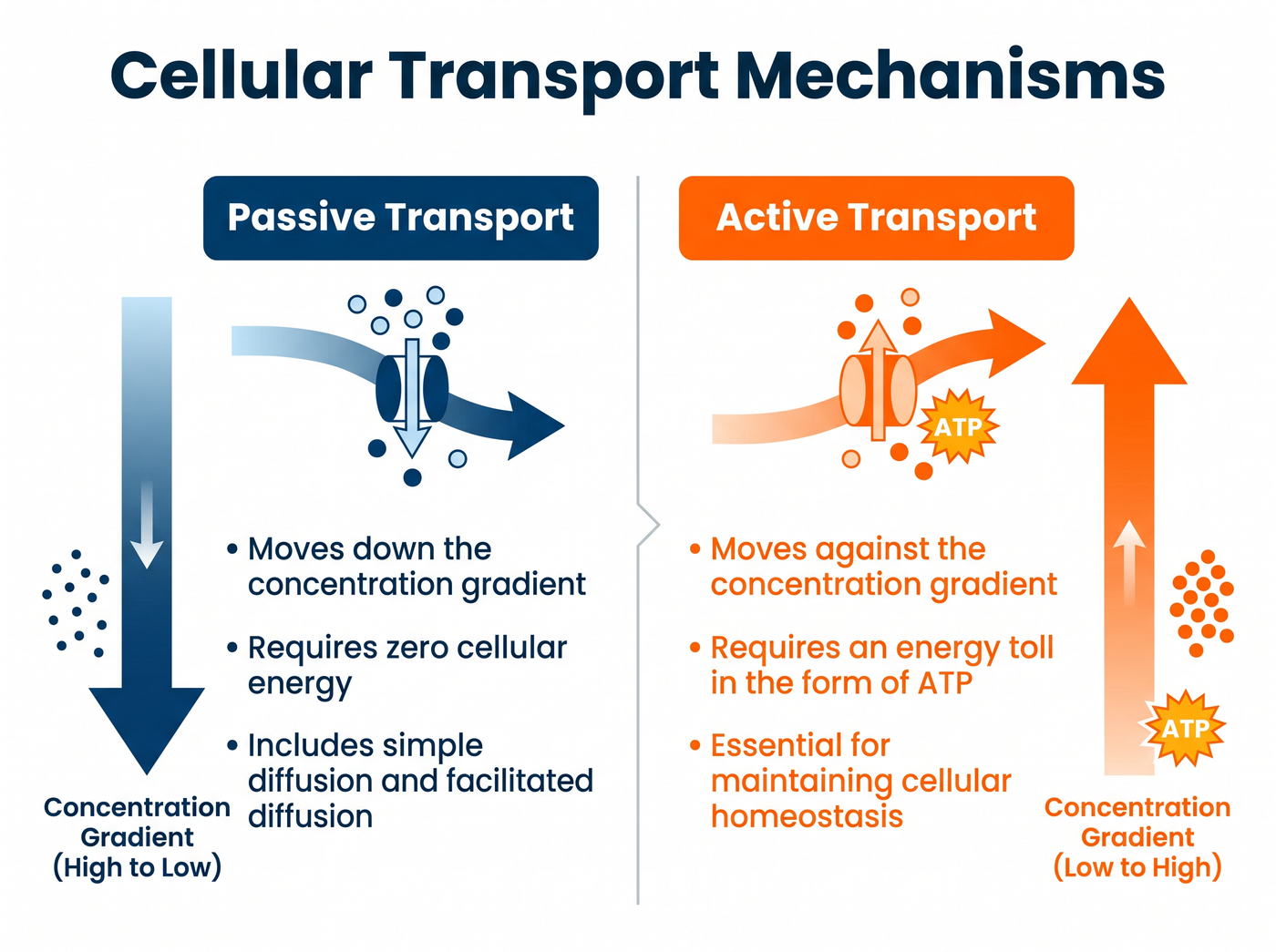
However, a completely sealed cell would perish. It must breathe, take in nutrients, and export waste. This is where selective permeability comes in. Small, non-charged molecules like oxygen can pass through the membrane via simple diffusion. This is an elegant process that moves molecules from crowded areas to less crowded areas, requiring no energy expenditure from the cell [5].
Moving Cargo: Passive and Active Transport
Larger or electrically charged molecules, such as glucose, cannot easily slip through the oily bilayer. The membrane solves this by utilizing facilitated diffusion, which provides specialized protein channels that act as gated tunnels [6].
If a cell needs to move molecules against the standard concentration flow (pushing molecules from an area of low concentration into a crowded space), it must rely on active transport. This process requires the cell to spend its own internal energy to force particles into place. If these molecular pumps fail to operate, the cell loses its ability to regulate its internal volume, which can lead to extreme swelling or fatal dehydration. Maintaining this dynamic standoff is known as homeostasis, which is the primary mission of the cellular machinery [5].
The Internal Manufacturing Hub: Organelles
Once inside the cell, you will find a crowded system of specialized compartments known as organelles. These compartments ensure that incompatible chemical reactions do not interfere with one another. The endoplasmic reticulum and the Golgi apparatus function as the manufacturing and shipping departments, processing and packaging proteins with chemical shipping labels [4].
Meanwhile, lysosomes act as recycling centers. They contain powerful digestive enzymes that break down cellular waste and foreign invaders. Everything inside this bustling infrastructure is held together by the cytoskeleton, which provides dynamic tracks for motorized proteins to carry cargo across the cell with distinct purpose.
Enzymes: The Masters of Metabolic Reaction
None of the cell's processing or recycling would happen fast enough to support life without enzymes. In biochemistry, enzymes act as essential biological catalysts. Most reactions require an initial spark called activation energy, and enzymes expertly lower this barrier. They grab onto specific target molecules (substrates) and physically strain their chemical bonds so they break or join with minimal effort [3].
Because enzymes are incredibly specific, the cell can control metabolic pathways seamlessly. Recent scientific findings show that enzyme clusters work together to pass substrates securely down a line, ensuring efficient processing and keeping toxic intermediates from floating freely in the cytoplasm [5].
Recharging the Batteries: ATP and Cellular Respiration
Running a cellular city requires an enormous supply of energy, and the cell uses a single, universal currency known as Adenosine Triphosphate (ATP). The power of ATP lies in its three negatively charged phosphate groups that repel each other like a tightly coiled spring. Breaking the bond of the outermost phosphate group releases a sudden burst of energy, leaving behind a depleted molecule known as ADP [1].
The recharging of ADP back into ATP happens through cellular respiration. While it begins in the cytoplasm (via a process called glycolysis), the bulk of this energy production takes place inside the mitochondria. Cellular respiration acts as a slow, controlled burn that safely releases the energy stored in glucose [2].
During the final stage, known as the electron transport chain, electrons power molecular pumps that create massive proton pressure. This pressure spins a microscopic turbine called ATP synthase at thousands of rotations per minute, mechanically pushing phosphate groups back onto ADP to restore the fuel supply [1][2].
By Sunday, May 10, 2026, advances in metabolic research continue to reveal that protecting this internal cellular machinery from oxidative stress is paramount for overall human health and longevity.
Listen to the episode
If you want to dive deeper into the microscopic mechanisms that power human life, tune in to the full discussion on Biology 101. From the smart gatekeeping of the phospholipid bilayer to the energetic mechanics of molecular movement, uncover the hidden infrastructure of your biology.
Listen to Inside the Cell: Membranes, Enzymes, and Metabolism