
Stepping into a Norwegian café or restaurant offers more than just a culinary promise; it is an invitation to participate in a culture defined by efficiency, coziness, and understated politeness. While many hospitality workers in hubs like Oslo or Bergen speak fluent English, making an effort to order in Norwegian transforms a simple transaction into a genuine cultural exchange.
Understanding a few key phrases helps you navigate the menu with confidence and shows respect for local customs.
Mastering the Sounds of the Table
Before diving into the menu, it is helpful to recognize the unique vowels that color the Norwegian language. These sounds are distinct and essential for clear communication:
- æ: Pronounced like the 'a' in 'apple'.
- ø: Similar to the 'u' in 'burn'.
- å: Sounds like the 'o' in 'more'.
You will also rely heavily on two foundational verbs: spise (to eat) and drikke (to drink). Practicing these basics builds a solid foundation for the specific vocabulary used in dining scenarios.
Decoding the Menu
When you first sit down, you’ll be looking for menyen (the menu). While many establishments offer English translations, understanding the standard Norwegian meal structure helps you navigate the layout instinctively. [3]
A typical menu is divided into three main sections:
En forrettThe starter or appetizer. This might include soups or light fish dishes.En hovedrettThe main course. Look here for substantial items like biff (steak), kylling (chicken), or the ever-present fisk (fish).En dessertThe sweet finish to your meal.If you have dietary preferences, keep an eye out for grønnsaker (vegetables) [6] or ask the servitør (waiter) for guidance.
The Golden Phrases for Ordering
The most critical tool in your linguistic kit is the phrase used to place an order. In English, we often use "Can I have..." or "I'll take...". In Norwegian, the gold standard for politeness is strict but simple.
“Jeg vil gjerne ha…”
This translates to "I would like to have..." and is the preferred way to request food or drink. It sounds softer and more respectful than a direct "Jeg vil ha" (I want). [3]
For example, if you are ordering the salmon (laks), you would say:
"Jeg vil gjerne ha laksen, takk."
“Kan jeg få…”
This phrase means "Can I have..." and is equally common, especially when asking for something small or additional, like a glass of water. [1]
"Kan jeg få en kopp kaffe?" (Can I have a cup of coffee?) [3]
Dining Etiquette and Tips
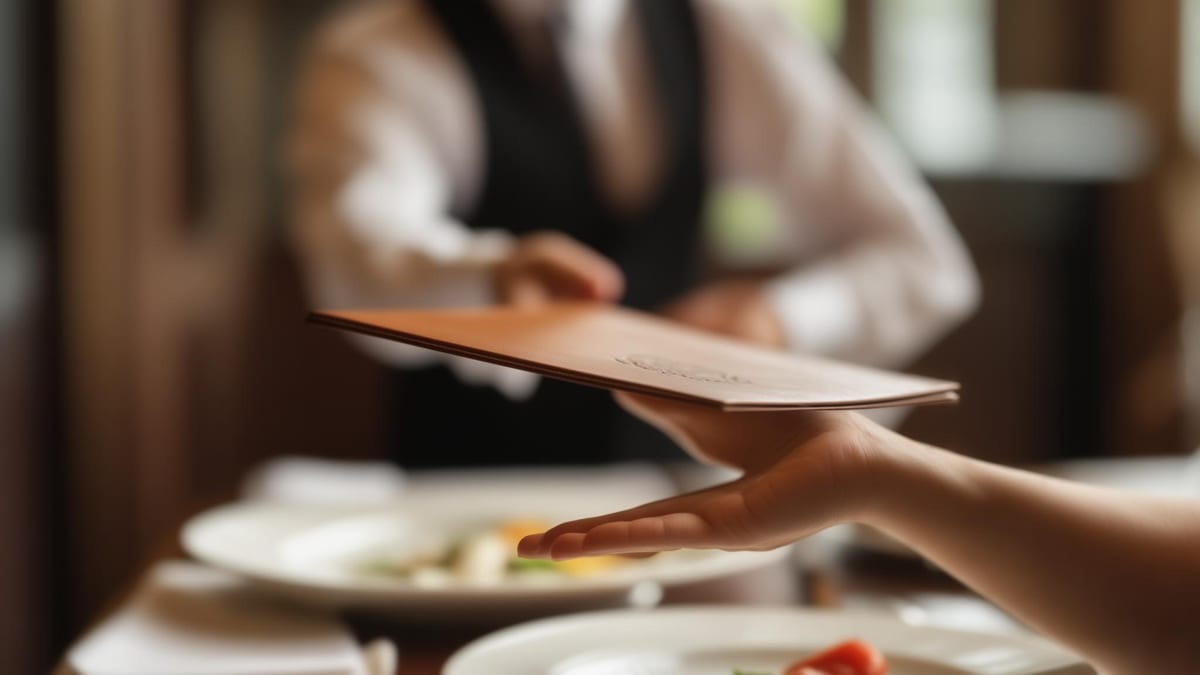
Norwegian dining culture is relaxed but polite. One major difference for visitors from North America is the usage of "please." Norwegian does not have a direct word for "please" that sits at the start of a sentence. Instead, the culture relies heavily on takk (thank you) at the end of requests to convey politeness.
Water and Tipping
Unlike in some European countries, tap water in Norway is of exceptional quality and is usually free. You can specificy this by asking for vann fra springen. If you prefer sparkling water, ask for farris or kullsyrevann.
When it comes to the bill (regningen), tipping customs are evolving. While service charges are often included in staff wages, it is becoming more common to tip between 5 to 10 percent for exceptional dinner service, though it remains optional for casual lunches or coffee.
By mastering "Jeg vil gjerne ha" and remembering your "takk," you will find that Norwegian servers are warm and appreciative of your efforts to speak their language.
Listen to the episode
Ready to practice your pronunciation? Listen to the full episode to hear these phrases in action and role-play your next restaurant visit.
Food & Ordering: Cafés, Restaurants & Practical Phrases