
Navigating a new city is one of the most immediate and vulnerable experiences you can have in a foreign country. In Norway, particularly in urban hubs like Oslo, the public transport system is highly organized but comes with a specific set of vocabulary. For a language learner, the daily commute is not just a logistical necessity; it is a mobile classroom.
Whether you are trying to find the nearest station or figuring out which ticket to buy, mastering a few key phrases can transform you from a confused tourist into a confident traveler. This guide covers the essential vocabulary, the tricky grammar of direction, and the cultural nuances of getting around in Norway.
The Universal Icebreaker: Unnskyld
Before you ask for directions, you need to know how to interrupt politely. The most essential social lubricant in the Norwegian language is Unnskyld (pronounced roughly as "unn-shill"). While it translates to "Excuse me" or "Sorry," it is the standard way to get a stranger's attention.
When you pair this with the phrase Hvor er...? (Where is...?), you have the backbone of every navigational inquiry. For example:
- "Unnskyld, hvor er togstasjonen?" (Excuse me, where is the train station?)
- "Unnskyld, hvor er holdeplassen?" (Excuse me, where is the bus stop?)
Decoding Modes of Transport
Oslo's transport network, managed largely by Ruter, connects various modes of travel seamlessly.[1] To read the signs and maps correctly, you need to recognize the Norwegian terms for these vehicles:
- T-bane: The metro or subway system. This is often the fastest way to cross the city.
- Trikken: The tram. These are iconic in Oslo and great for street-level sightseeing.
- En togstasjon: A train station.
- Fergen: The ferry (vital for navigating the fjords).
Modern travel in Norway has shifted heavily toward digital solutions. You will often find timetables and route maps online rather than relying solely on printed kiosks.[3]
The Preposition Puzzle: i vs. på
Asking "Where is...?" is the easy part. Understanding the answer requires you to grasp Norwegian prepositions. While til (to) and fra (from) are straightforward, the difference between i and på can be confusing for beginners.[5]
Generally, you use i (pronounced "ee") for enclosed spaces or defined geographic areas, such as cities or rooms. Conversely, you use på (pronounced "paw") for surfaces, open spaces, institutions, and most interestingly, modes of transport.
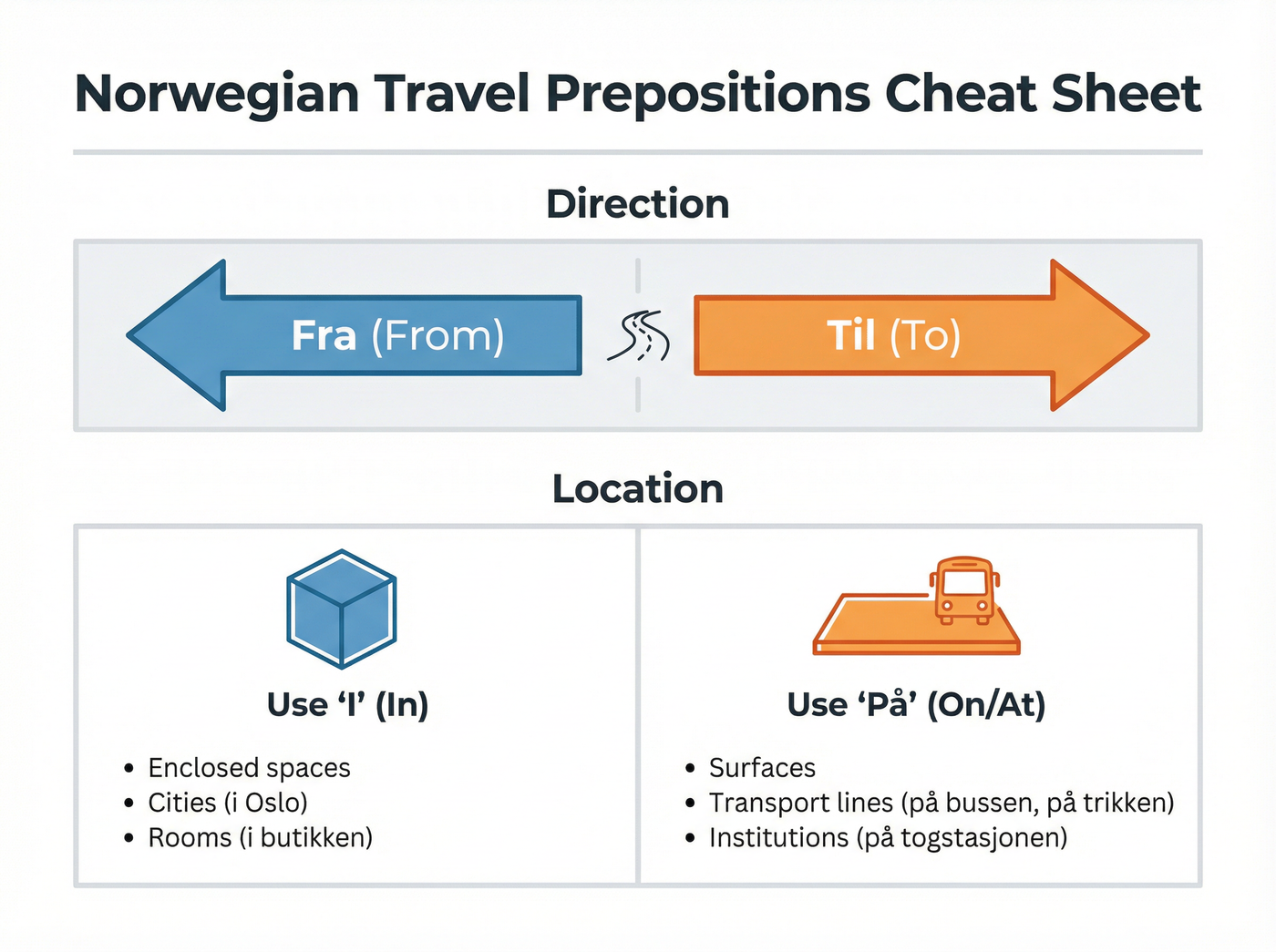
This means you are i Oslo (in Oslo), but you are standing på perrongen (on the platform) or sitting på bussen (on the bus).
Buying Your Ticket: Voksen or Honnør?
Whether you are using an app or speaking to a clerk, buying en billett (a ticket) involves specific vocabulary. A standard request would be: "En enkeltbillett til sentrum, takk" (One single ticket to the center, please).[1]
You may be asked to specify the ticket category. It is crucial to choose the right one to avoid fines during a ticket inspection:
Voksen Adult fare. This is the standard price for those between roughly 18 and 67 years old. Honnør Senior or discounted fare. This applies to seniors (usually over 67) and sometimes people with disabilities.[1]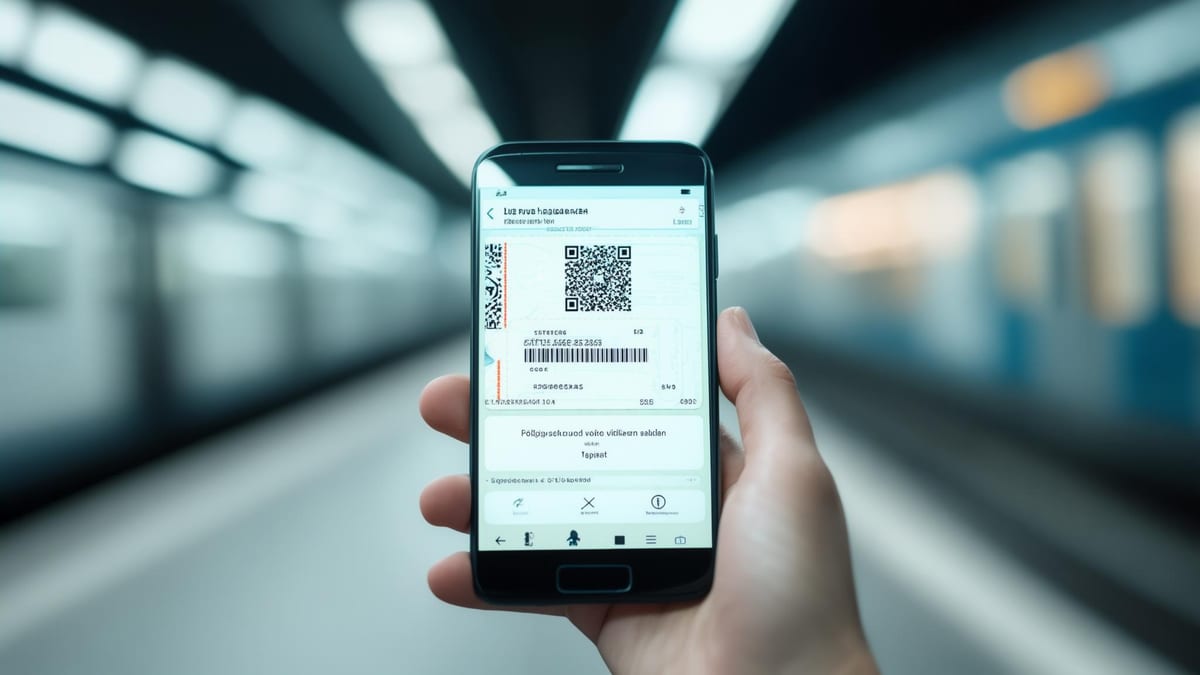
Understanding Directions
Once you have asked for help, you need to be able to follow the instructions given to you. Norwegians are generally helpful and will switch to English if you are stuck, but trying to follow Norwegian directions is excellent practice. Listen for these key command phrases:[6]
- Gå rett frem: Go straight ahead.
- Ta til høyre: Turn right.
- Ta til venstre: Turn left.
You might hear a combination, such as "Gå rett frem, og ta til høyre etter kirken" (Go straight ahead, and turn right after the church). Keep an ear out for announcements on board as well, such as "Dørene lukkes" (The doors are closing), which serves as a repetitive listening exercise during your ride.
Listen to the episode
Directions & Travel: Getting Around in Norway