
Listen to the episode
Listen to "Color of Emotion: Vibrant Hues in Expressionist Canvases" on pody.fm
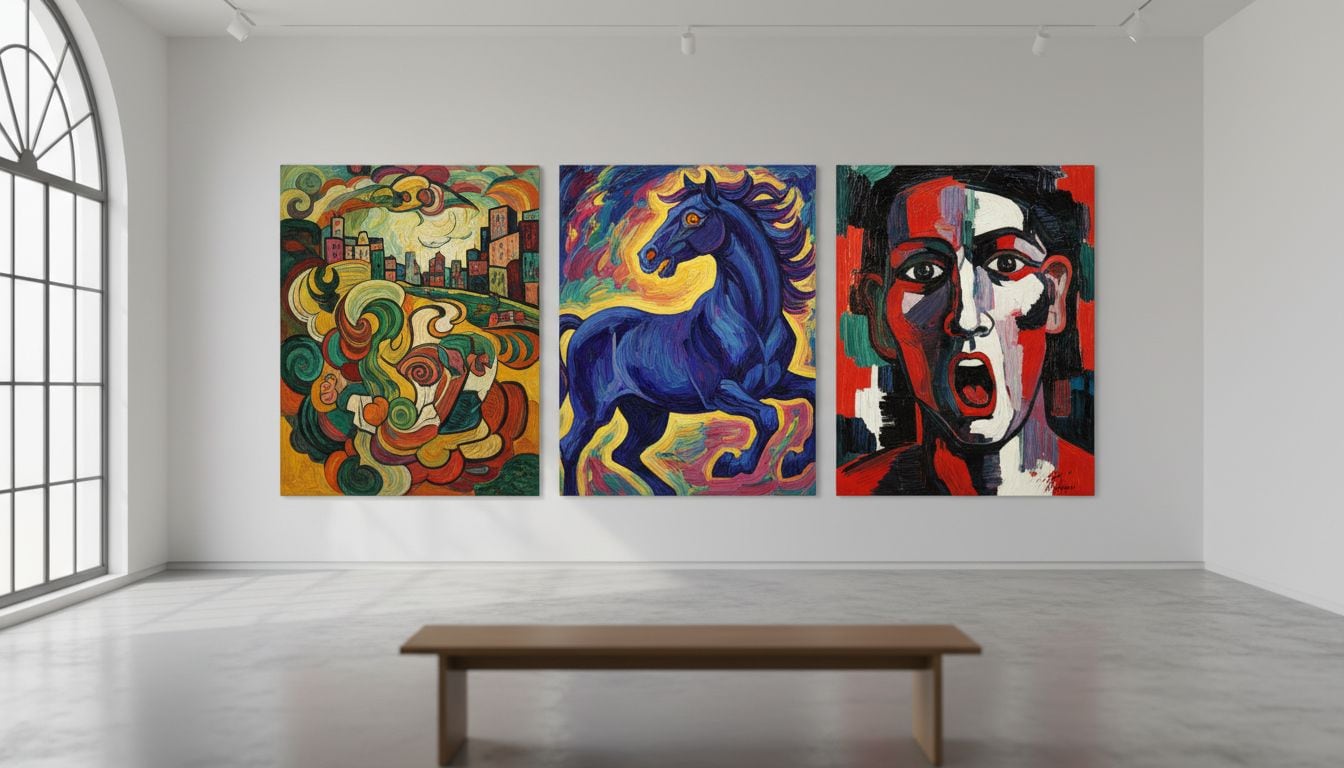
At the dawn of the 20th century, a group of artists made a collective decision that changed the trajectory of visual art: they decided that the sky didn’t have to be blue, and grass didn’t have to be green. This wasn’t a matter of poor observation or a lack of technical skill. It was a calculated revolution known as Expressionism.
While the Impressionists who came before them were obsessed with capturing the fleeting nature of light and the physical look of the world, the Expressionists were interested in something far less tangible. They wanted to reveal how the world felt. To do this, they wielded vibrant, non-naturalistic color as a weapon to bypass the viewer's logic and strike directly at the emotions.
Painting How It Feels, Not How It Looks
The Expressionist movement emerged during a time of profound social upheaval. Rapid industrialization and the looming shadow of World War I created an atmosphere of alienation and anxiety in Germany and Austria. For these artists, the "natural" world no longer felt stable or comforting, and realistic depiction felt inadequate to capture the psychological discord of modern life.[4]
Instead of acting as a mirror to the exterior world, the canvas became a mirror to the interior soul. Artists like Wassily Kandinsky and Ernst Ludwig Kirchner used color to distort reality deliberately. By detaching color from the object it belonged to—painting a face green to show sickness or envy, or a sky blood-red to show panic—they created a visual language that communicated raw emotion without the need for words.[6]
The Spiritual Code of Color
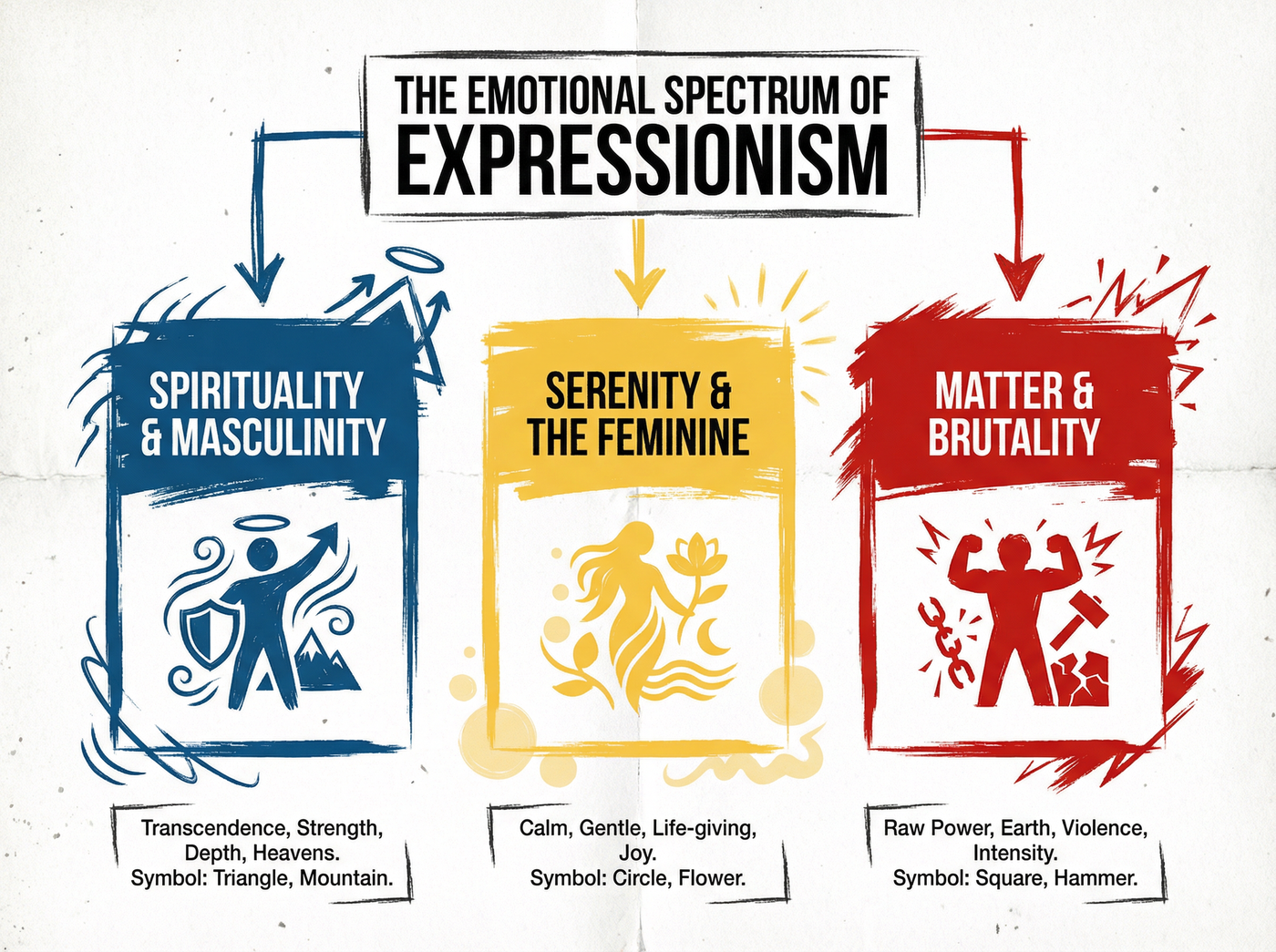
Within the movement, color was often treated with almost religious significance. The group known as Der Blaue Reiter (The Blue Rider), led by Kandinsky and Franz Marc, developed specific spiritual values for different hues. They believed that color aimed to awaken the human spirit.
Franz Marc, for instance, developed a personal theory of color symbolism:
- Blue: Represented the masculine principle, severe and spiritual.
- Yellow: Represented the feminine principle, gentle, serene, and sensual.
- Red: Represented matter, brutal and heavy, which must be fought and overcome by the other two.
This coding system meant that a painting of blue horses was not just a whimsical choice; it was a depiction of spiritual masculinity and mystical energy found in nature.[3]
The Vibration of Anxiety
A common misconception about Expressionism is that its use of bright, vivid palettes was intended to be cheerful or decorative. In reality, the brightness was often designed to be jarring. Expressionists frequently employed acrid color juxtapositions—placing high-intensity colors like burning pink next to acidic green—to create a visual vibration that feels uncomfortable to the eye.[1]
This technique creates a sense of tension that mirrors the artist's internal angst. The most famous precursor to this style is Edvard Munch’s The Scream. The swirling, blood-red sky in the painting is not a literal sunset but a visualization of a "great, infinite scream passing through nature." In this context, color functions like a sound wave, distorting the environment until the landscape and the emotion are indistinguishable.[2]
Art as a Political Threat
The radical honesty of Expressionism eventually made it a target. The movement's refusal to adhere to traditional beauty standards and its focus on psychological unease were viewed by the Nazi regime as symbols of mental and moral decay. In the 1930s, the regime labeled these works "Degenerate Art" (Entartete Kunst) and systematically purged them from German museums.[5]
This historical persecution highlights the immense power of the movement: Expressionist art was effective enough at conveying individual truth and dissent that it was deemed a threat to the state's enforced order. Today, however, the legacy of these artists endures. Their refusal to paint the world as it "should" be, and instead paint it as it felt, unlocked a new dimension of visual storytelling that continues to influence modern cinema, graphic design, and psychology.
Sources
- Brightness Isn’t Cheerful – Rethinking Bright Expressionism in Contemporary Art | WeArt
- Expressionism: Color and Emotion in Twentieth-Century Art – Materico
- The Bold Colors And Emotions Of German Expressionism – ForThePeopleCollective.org
- 12.4: Expressionism (1905 – 1930) - Humanities LibreTexts
- 5.6: Expressionism (1912-1935) - Humanities LibreTexts
- Expressionism Made Simple: Understanding the Art Movement